antik.it/Natural-history/727-Fragment-of-Blue-John/
Code 727
EUR 600.00
In stock
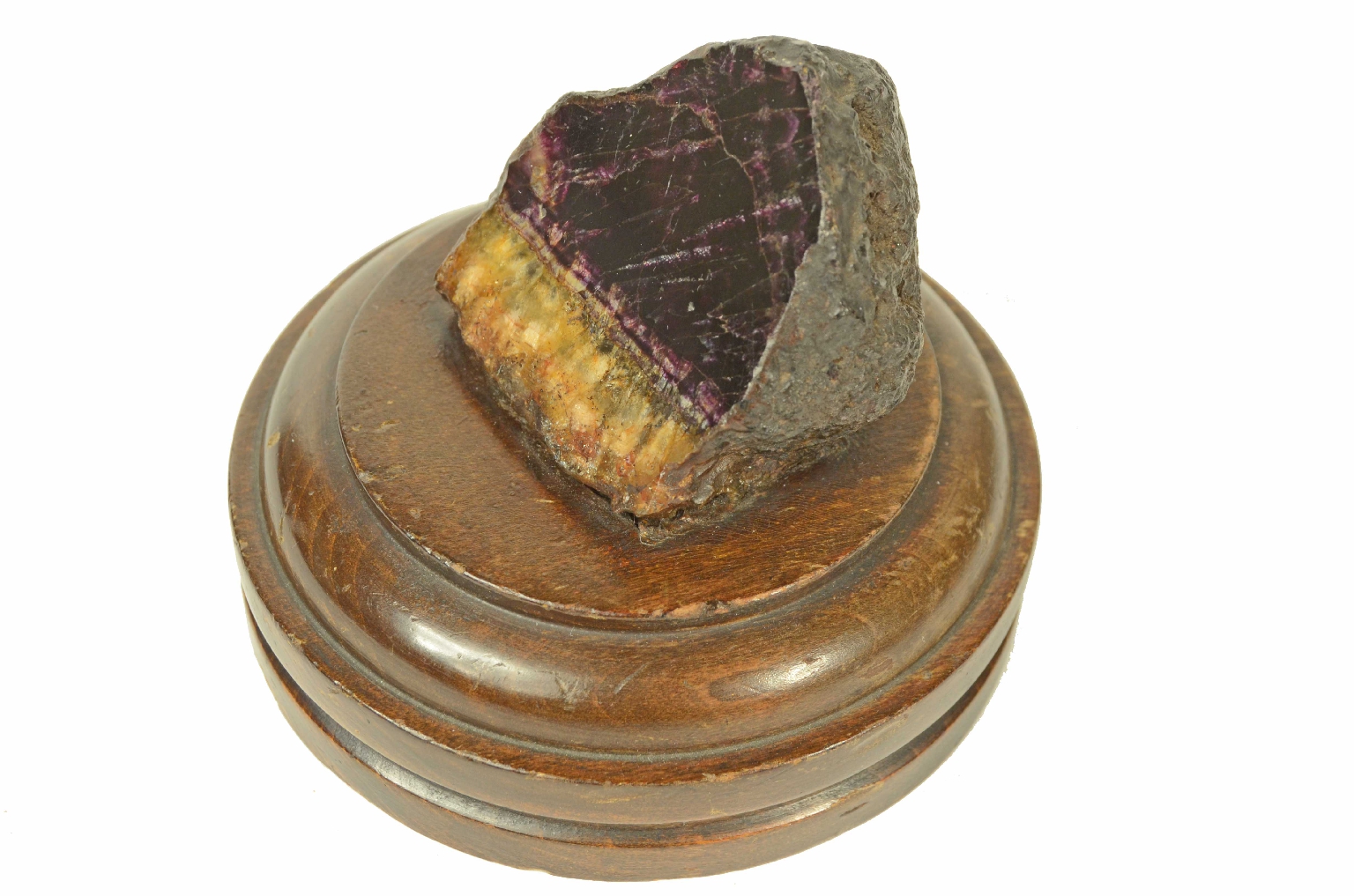
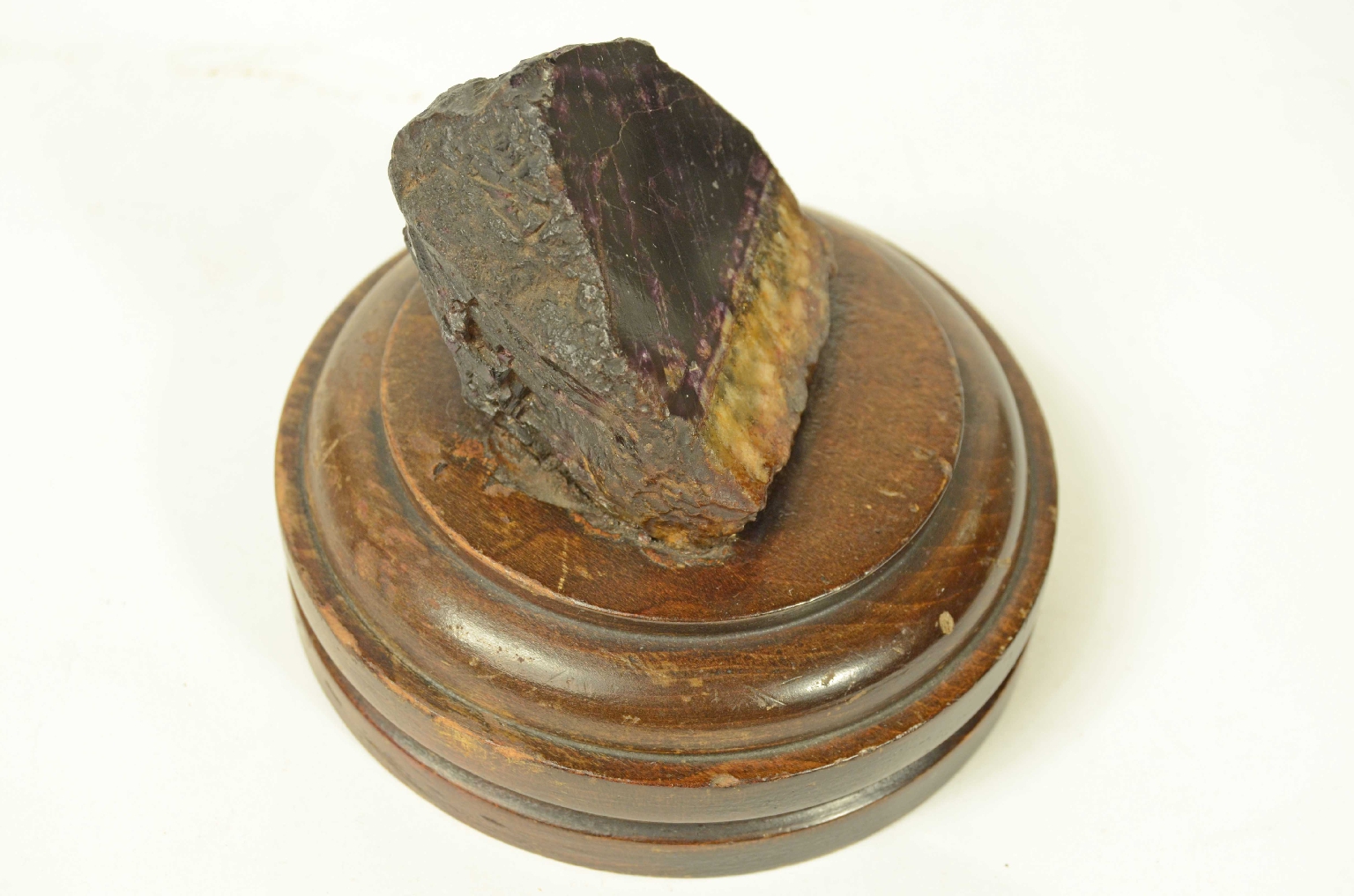
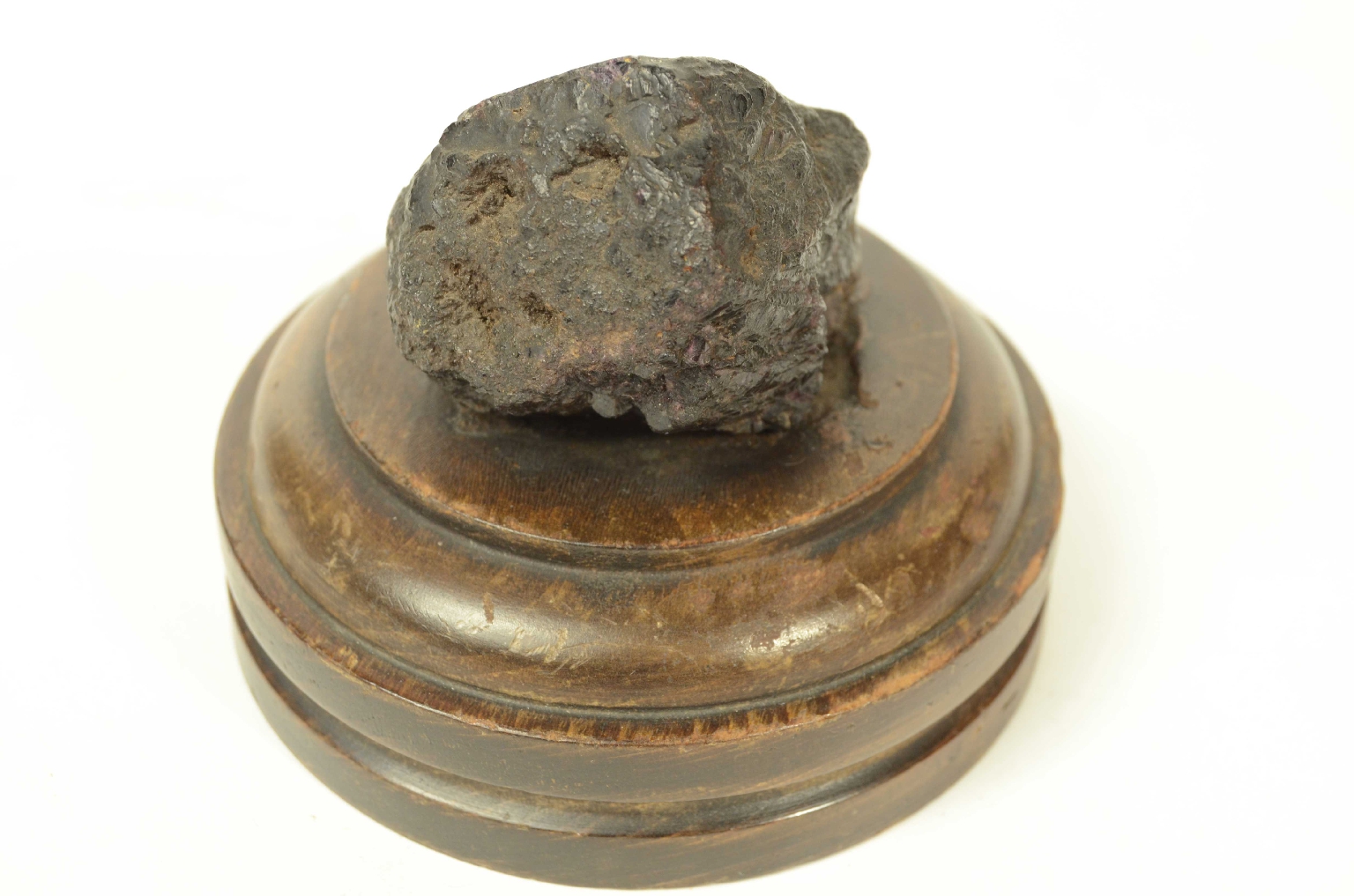
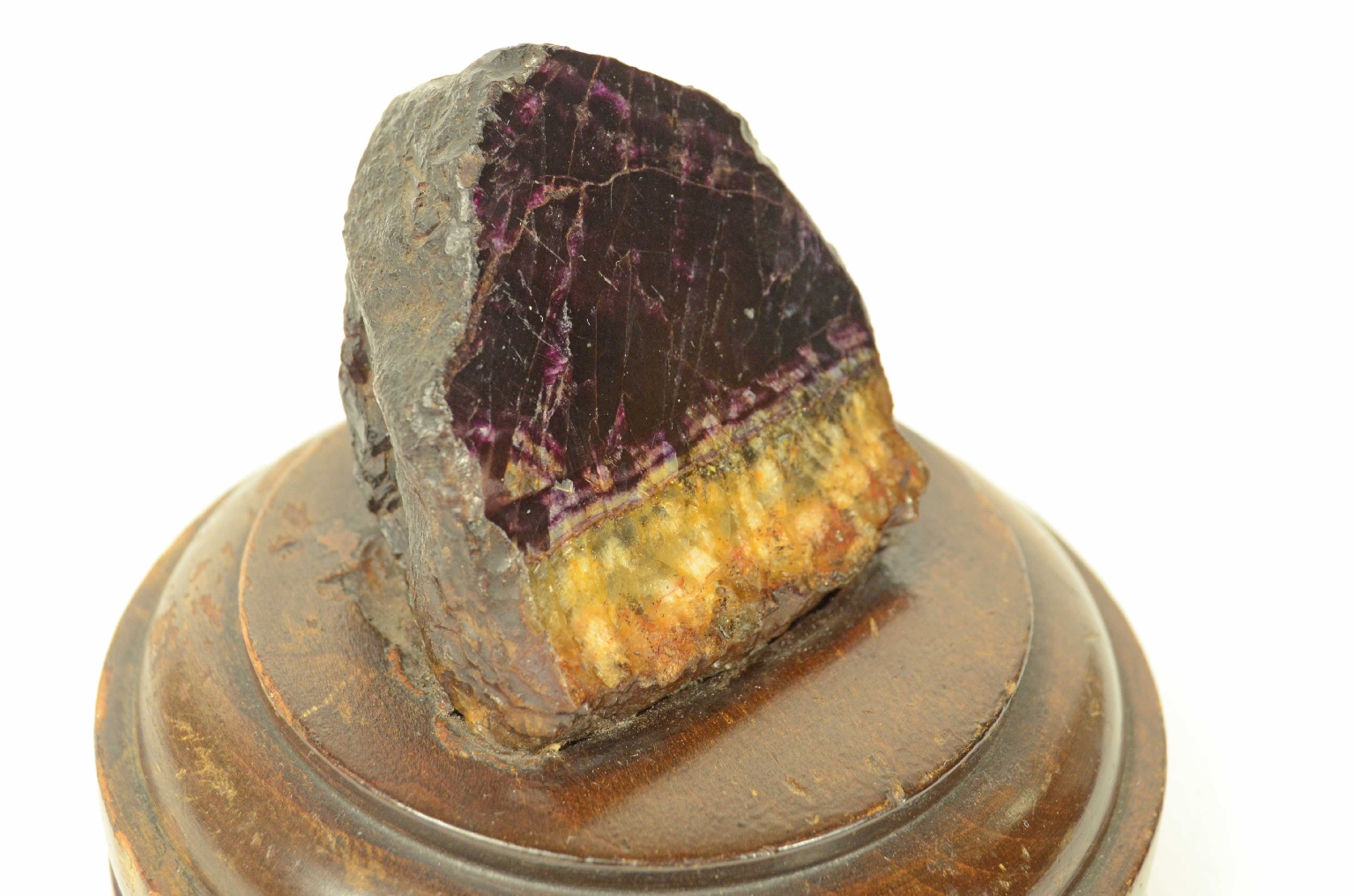
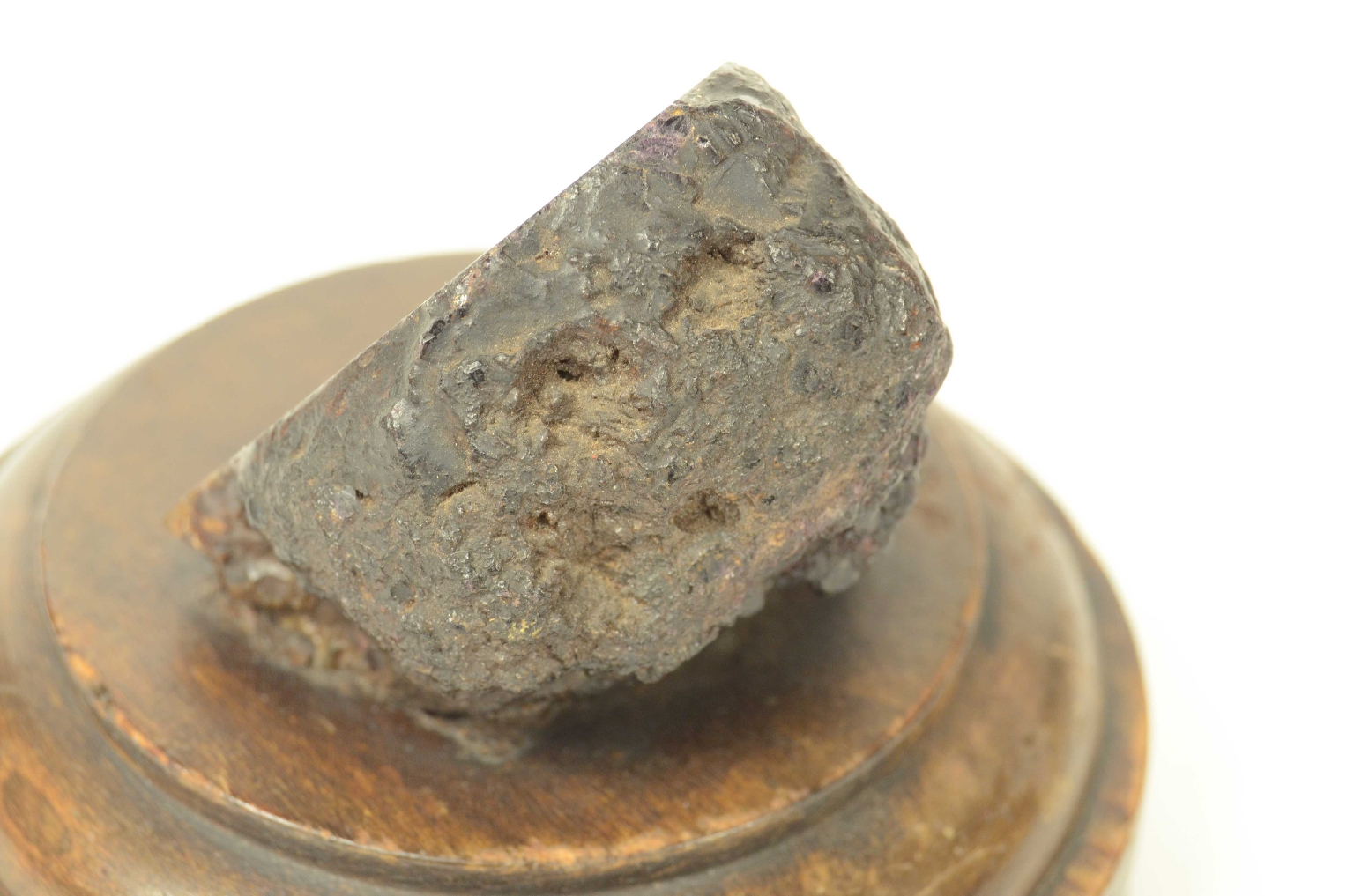
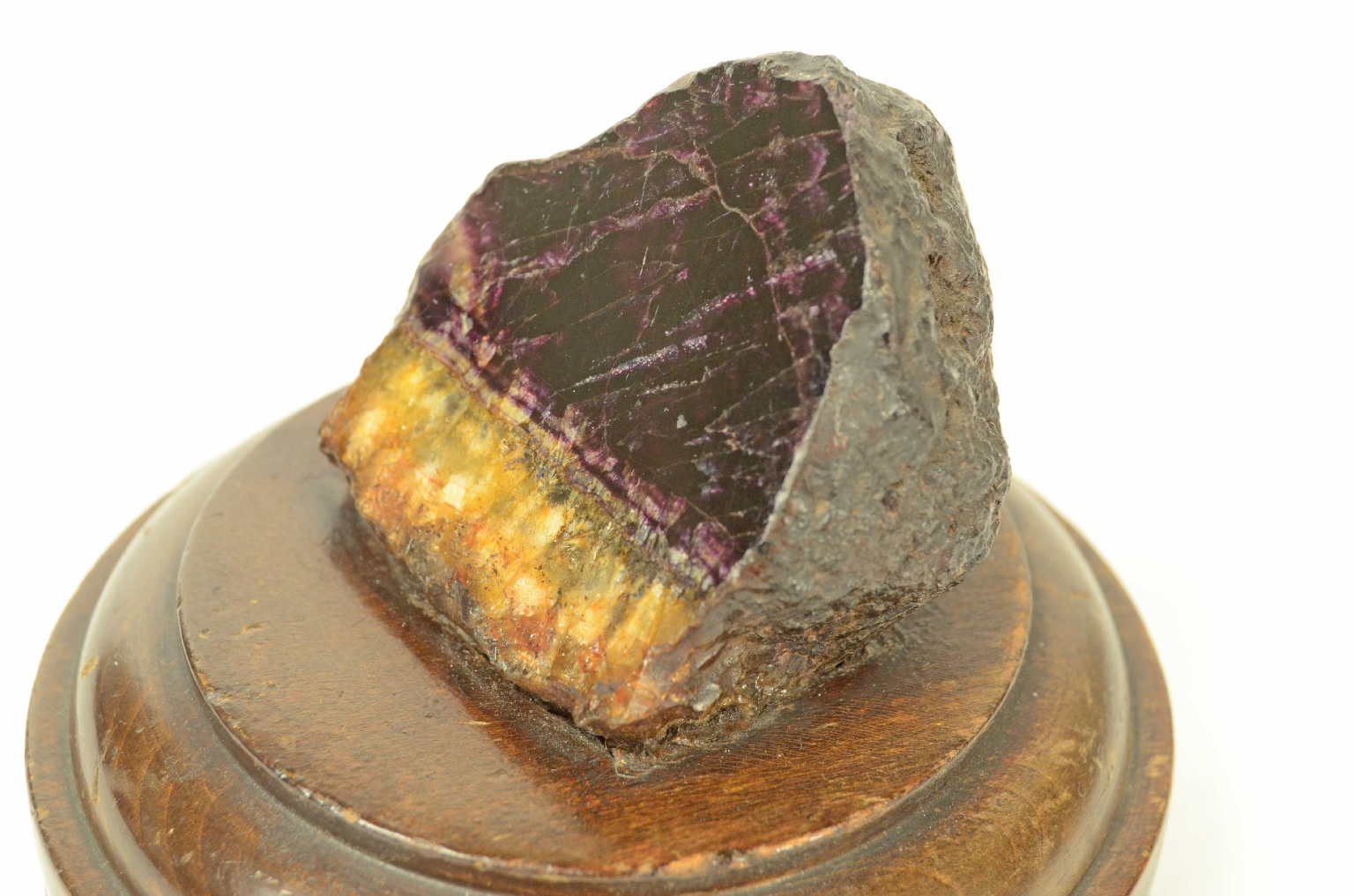
1772038869Code 727 Fragment of Blue JohnFragment of Blue John, a very rare and unique variety of fluorite, from the early 1900s, characterized by spectacular purple-blue and creamy-yellow bands, cut, polished, and mounted on a turned wooden support.
Dimensions: 5.7 x 5 x 5 cm – 2.2 x 2 x 2 in, base diameter: 10.5 cm – 4.2 in.
Blue John is found virtually exclusively in a specific area of England, the Peak District, specifically near the village of Castleton (Derbyshire).
It is extremely rare because there are no significant deposits outside that area.
It is used for ornamental objects: jewelry, vases, cups, and sculptures.
The name Blue John almost certainly derives from the French bleu et jaune – blue and yellow – due to its typical colors.
Blue John is found virtually exclusively in a specific area of England, the Peak District, specifically near the village of Castleton (Derbyshire).
It is extremely rare because there are no significant deposits outside that area.
It is used for ornamental objects: jewelry, vases, cups, and sculptures.
The name Blue John almost certainly derives from the French bleu et jaune – blue and yellow – due to its typical colors.
FAQ
Do you provide an authenticity certificate/expertise?
Of course! The legislative decree n. 42/2004 stipulates that who sells works of art or historical and archaeological items has the obligation to deliver to the purchaser the documents attesting to the authenticity of the object, or at least to submit the documents relating to the probable attribution and origin. Antik Arte & Scienza provides an expertise (as warranty) that contains a description, period and assignment or the author, if known, of the item.
How can I pay?
Secure payments by PayPal, credit card or bank transfer.
What are the shipping terms and the delivery schedule?
Shipping by DHL or UPS is free (but if we are shipping to a country non-EU remember that any taxes and customs duties are on your expense), and items will be sent just after receiving of payment.
Italy: delivering on the average in 24 h.
Europe: delivering on the average in 2/3 weekdays.
Other countries: delivering on the average in 5 weekdays; custom duties charged to the buyer.
Is shipping insured?
Of course! Free insurance by Lloyd's London that covers almost all destinations.
If I change my mind, can I return the item?
Of course! (see our general terms for more information).
e-Shop
Natural history
Code 727 Fragment of Blue John
Antik Arte & Scienza sas di Daniela Giorgi - via S. Giovanni sul Muro 10 20121 Milan (MI) Italy - +39 0286461448 - info@antik.it - www.antik.it - Monday-Saturday: 10am-7pm