antik.it/Antique-compasses/8534-Nautical-Pocket-Compass/
Code 8534
EUR 600.00
In stock
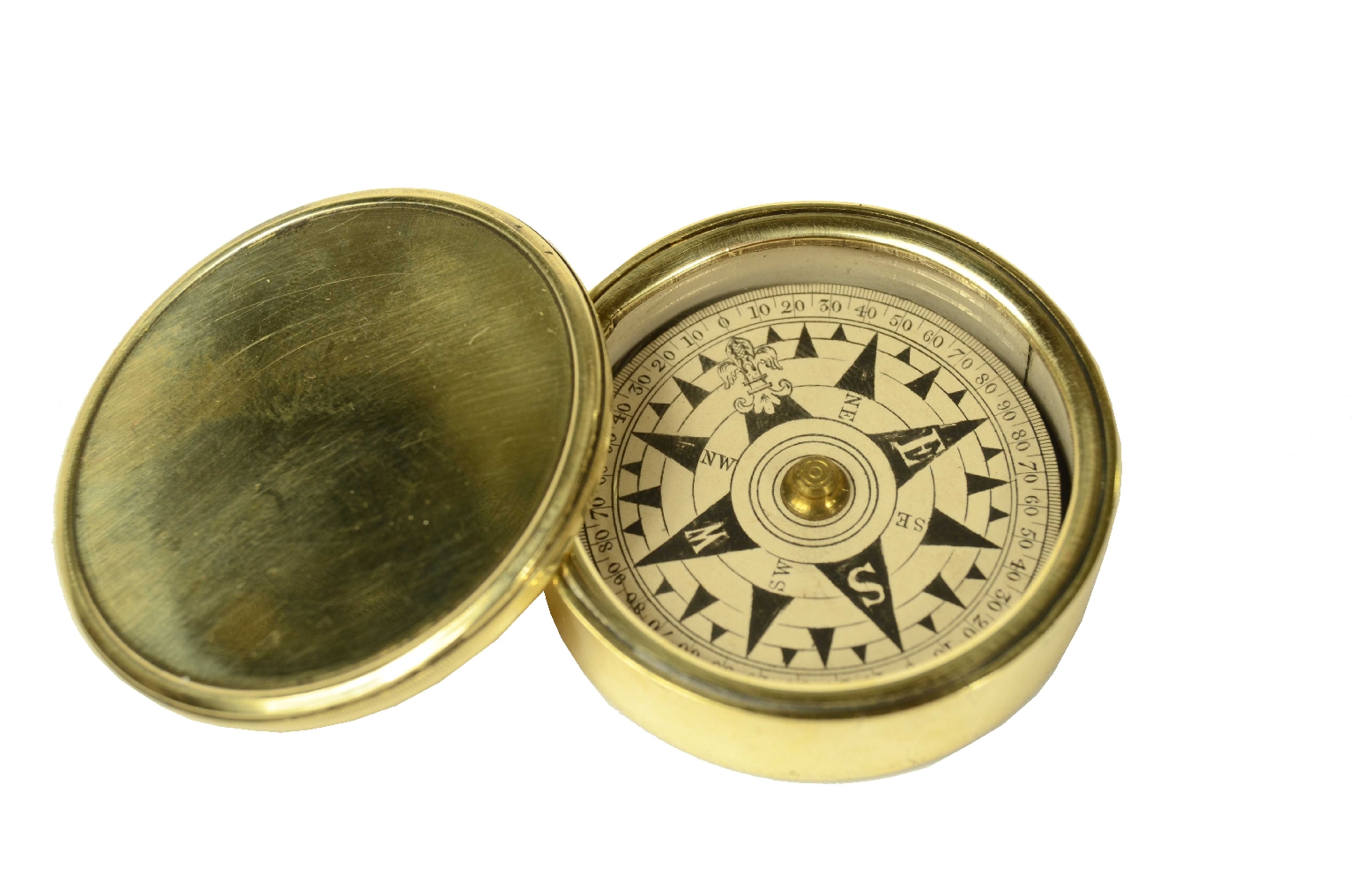
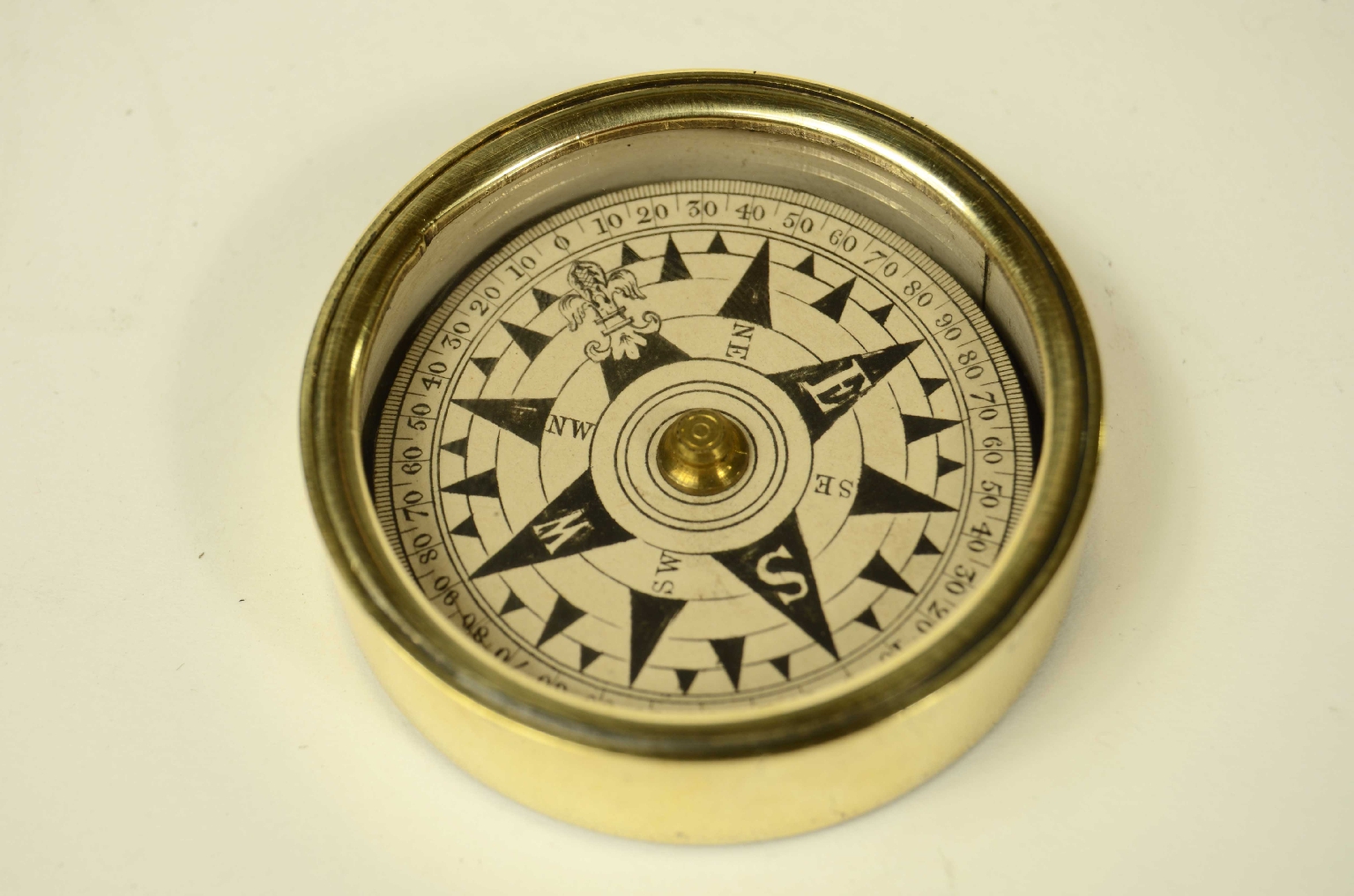
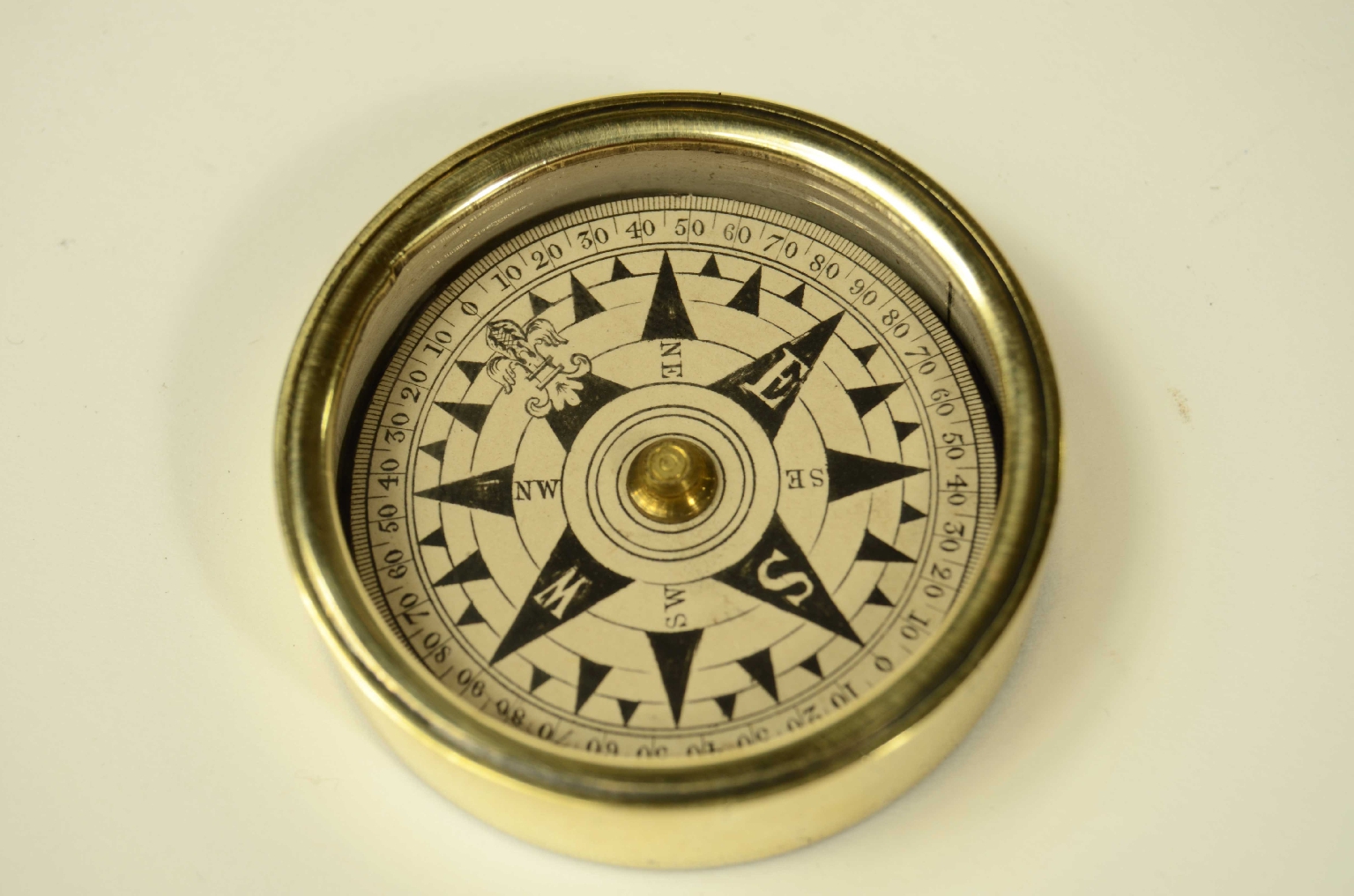
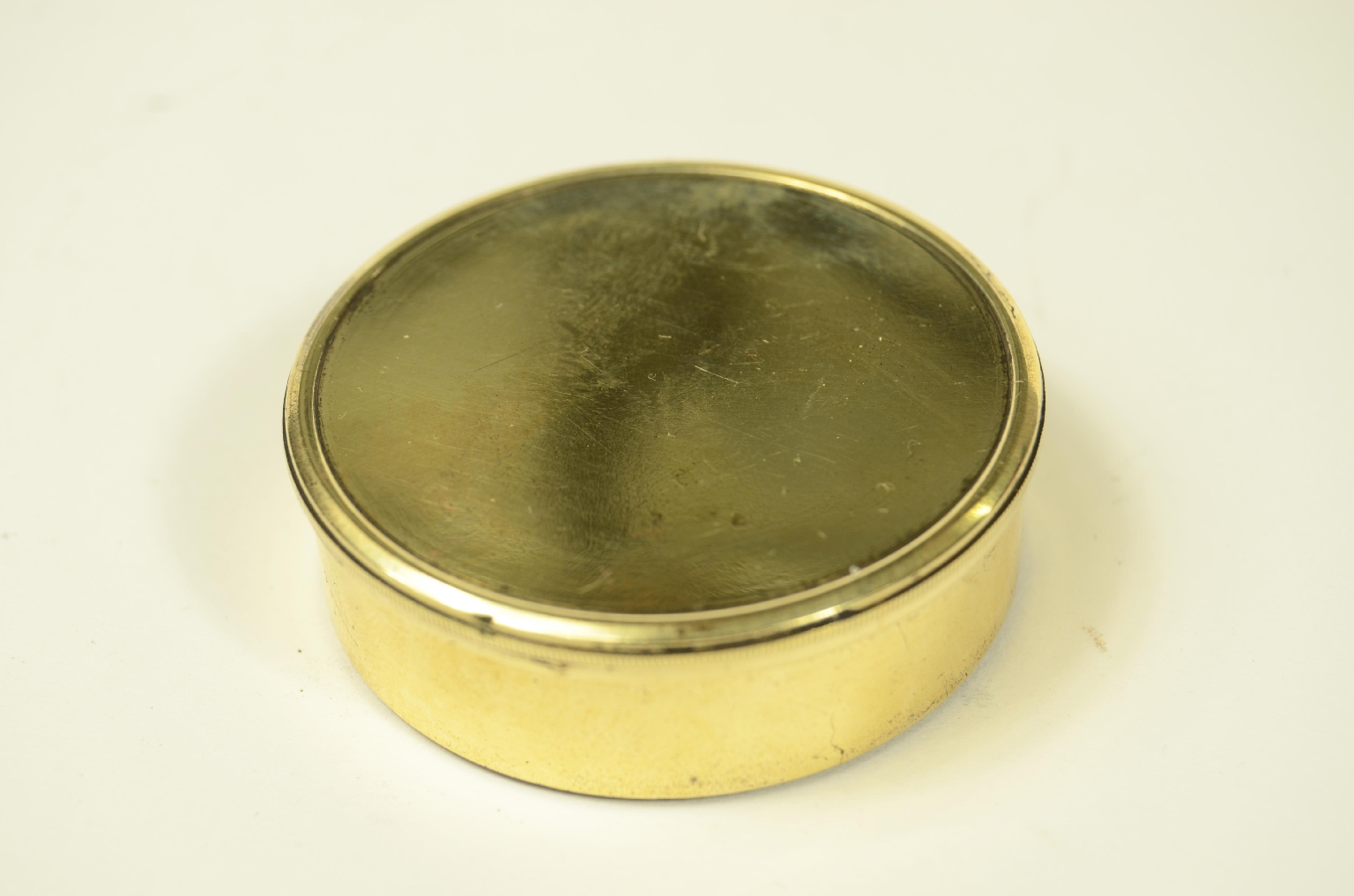
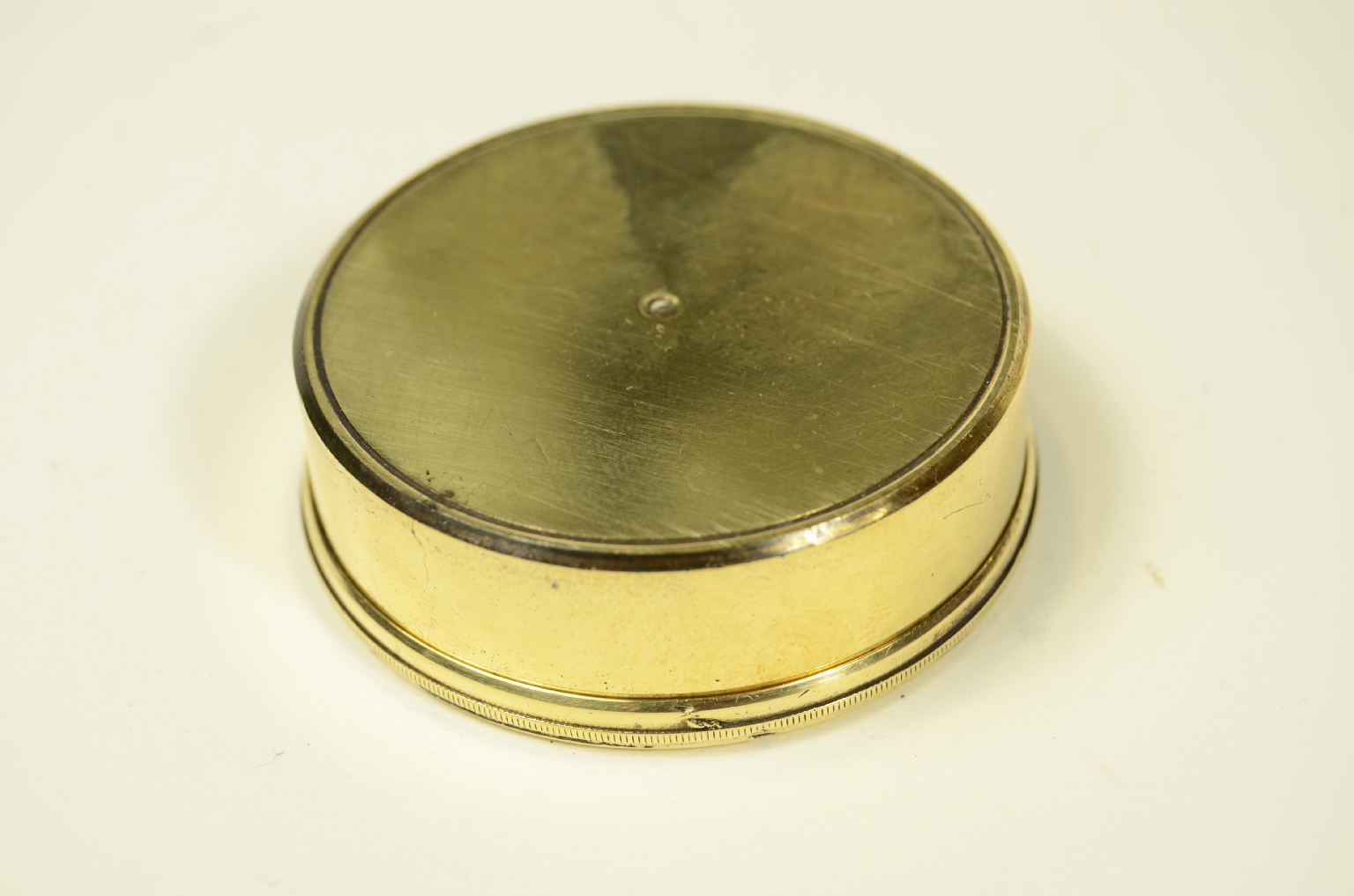
1782836116Code 8534 Nautical Pocket CompassRare travel nautical compass in turned brass, complete with lid; features an eight-point paper compass rose and a copper-plate engraved degree scale. English manufacture, second half of the 19th century.
Good condition, fully functional.
Dimensions: 4.5 x 1.5 cm (1.7 x 0.5 in).
The Greeks and Romans were unaware of the possibility of using magnetic fields for navigation, whereas this concept appears to have already been known to the Chinese in some form: around 2600 BC, Emperor Huang-Ti defeated the prince Chi-You in battle thanks to a "magic" chariot known as the *Si-Nan* (south-pointing chariot). Using this device, the emperor was able to track the enemy's escape route, even though the enemy had concealed it behind a smokescreen; a wooden human figure mounted on the chariot rotated on its axis and, with an outstretched arm, always pointed south (pointing south naturally indicated north as well, but the Chinese considered south to be the most important cardinal direction).
The first references to the use of magnetic navigational instruments in Europe date back to the late 12th century, largely due to knowledge introduced by Arab merchants and navigators; mentions of such devices appear in Alexander Neckam’s *De nominibus utensilium* and in the works of Guyot de Provins, who described the lodestone as a "sailor's companion." An inventory from the 13th century for a Sicilian ship, the *San Nicolò*, also records the presence of a lodestone and a "wooden compass" on board.
FAQ
Do you provide an authenticity certificate/expertise?
Of course! The legislative decree n. 42/2004 stipulates that who sells works of art or historical and archaeological items has the obligation to deliver to the purchaser the documents attesting to the authenticity of the object, or at least to submit the documents relating to the probable attribution and origin. Antik Arte & Scienza provides an expertise (as warranty) that contains a description, period and assignment or the author, if known, of the item.
How can I pay?
Secure payments by PayPal, credit card or bank transfer.
What are the shipping terms and the delivery schedule?
Shipping by DHL or UPS is free (but if we are shipping to a country non-EU remember that any taxes and customs duties are on your expense), and items will be sent just after receiving of payment.
Italy: delivering on the average in 24 h.
Europe: delivering on the average in 2/3 weekdays.
Other countries: delivering on the average in 5 weekdays; custom duties charged to the buyer.
Is shipping insured?
Of course! Free insurance by Lloyd's London that covers almost all destinations.
If I change my mind, can I return the item?
Of course! (see our general terms for more information).
e-Shop
Antique compasses
Code 8534 Nautical Pocket Compass
Antik Arte & Scienza sas di Daniela Giorgi - via S. Giovanni sul Muro 10 20121 Milan (MI) Italy - +39 0286461448 - info@antik.it - www.antik.it - Monday-Saturday: 10am-7pm