antik.it/Antique-compasses/8549-Small-Compass/
Code 8549
EUR 300.00
In stock
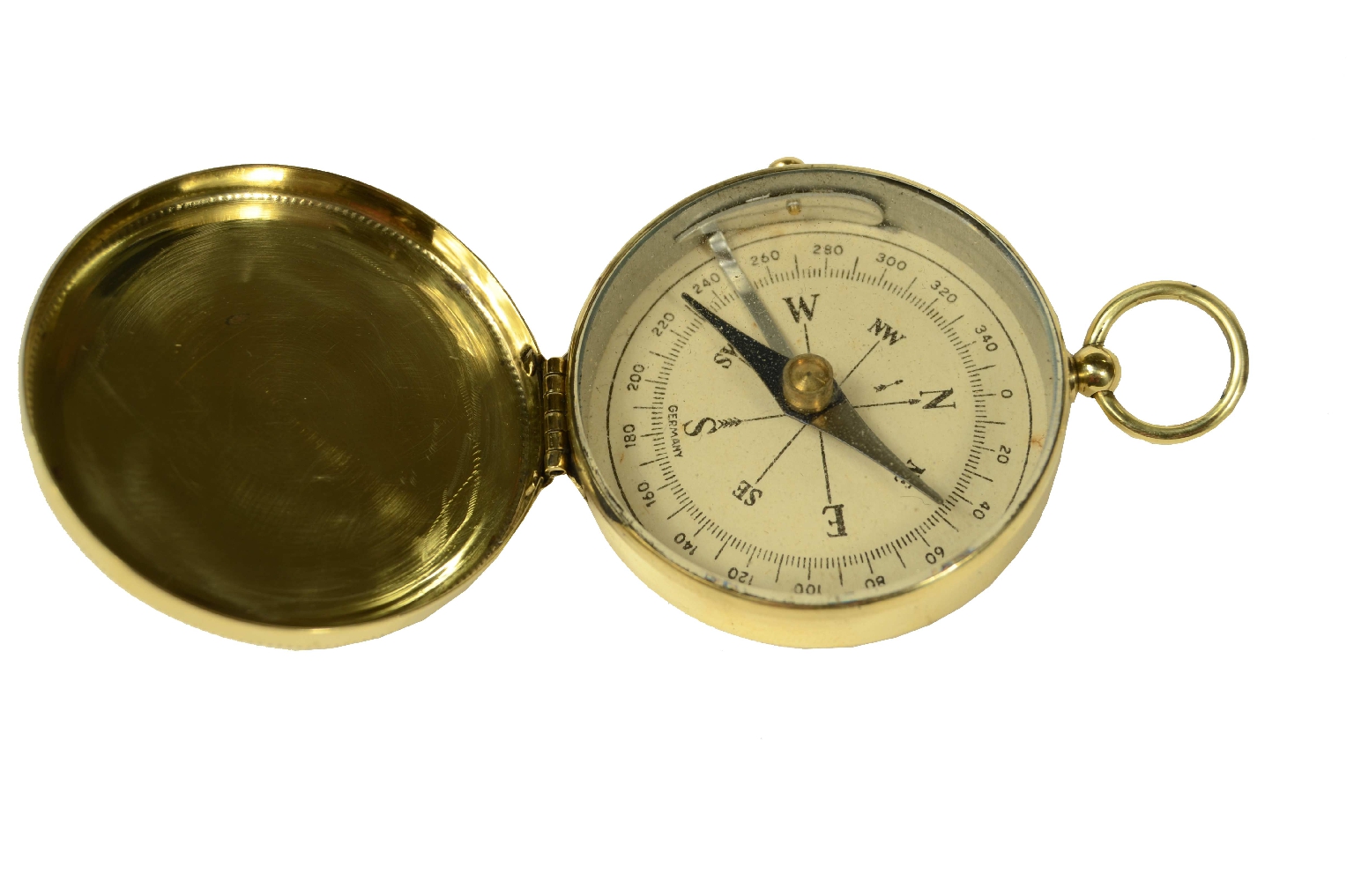
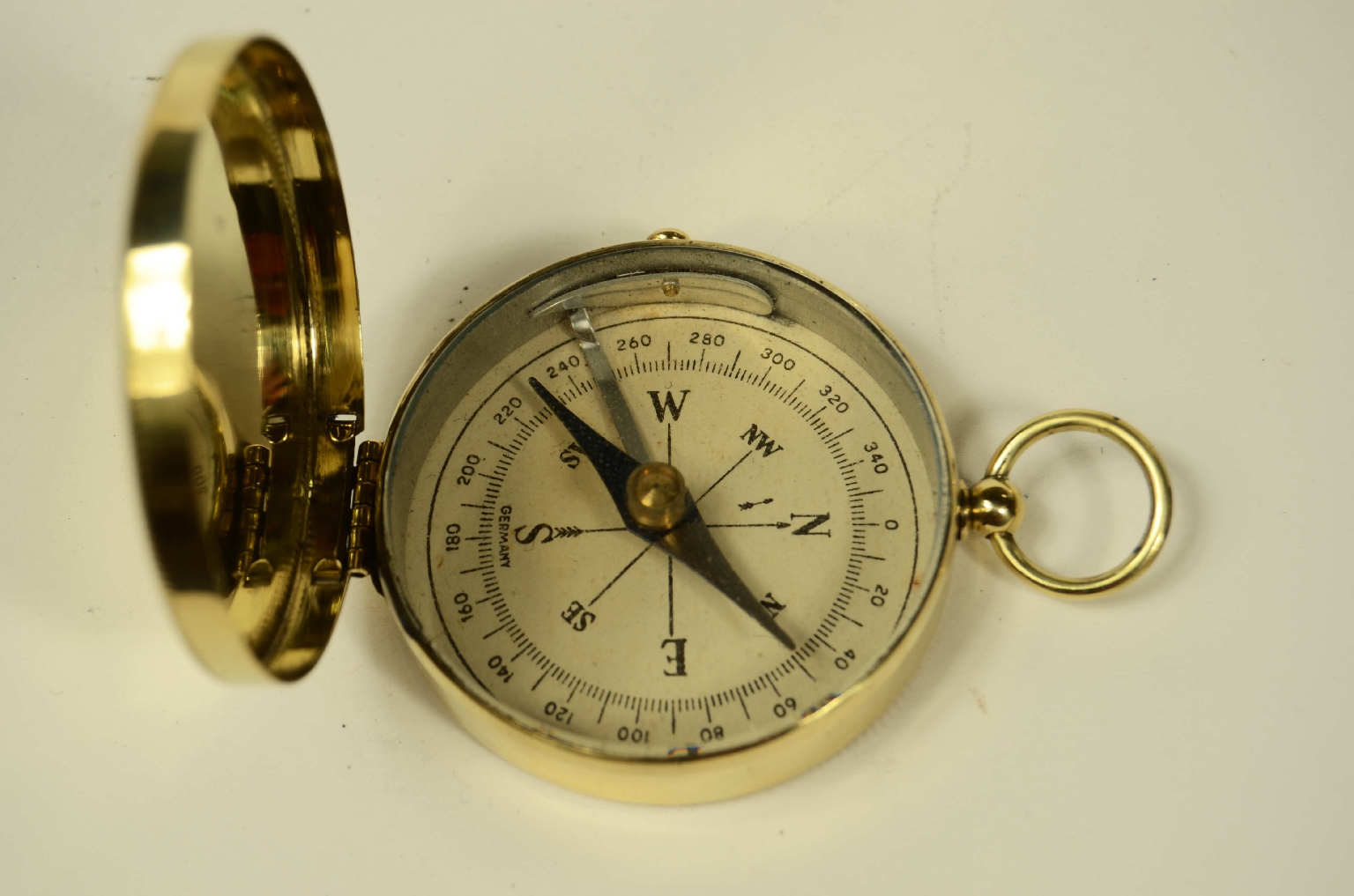
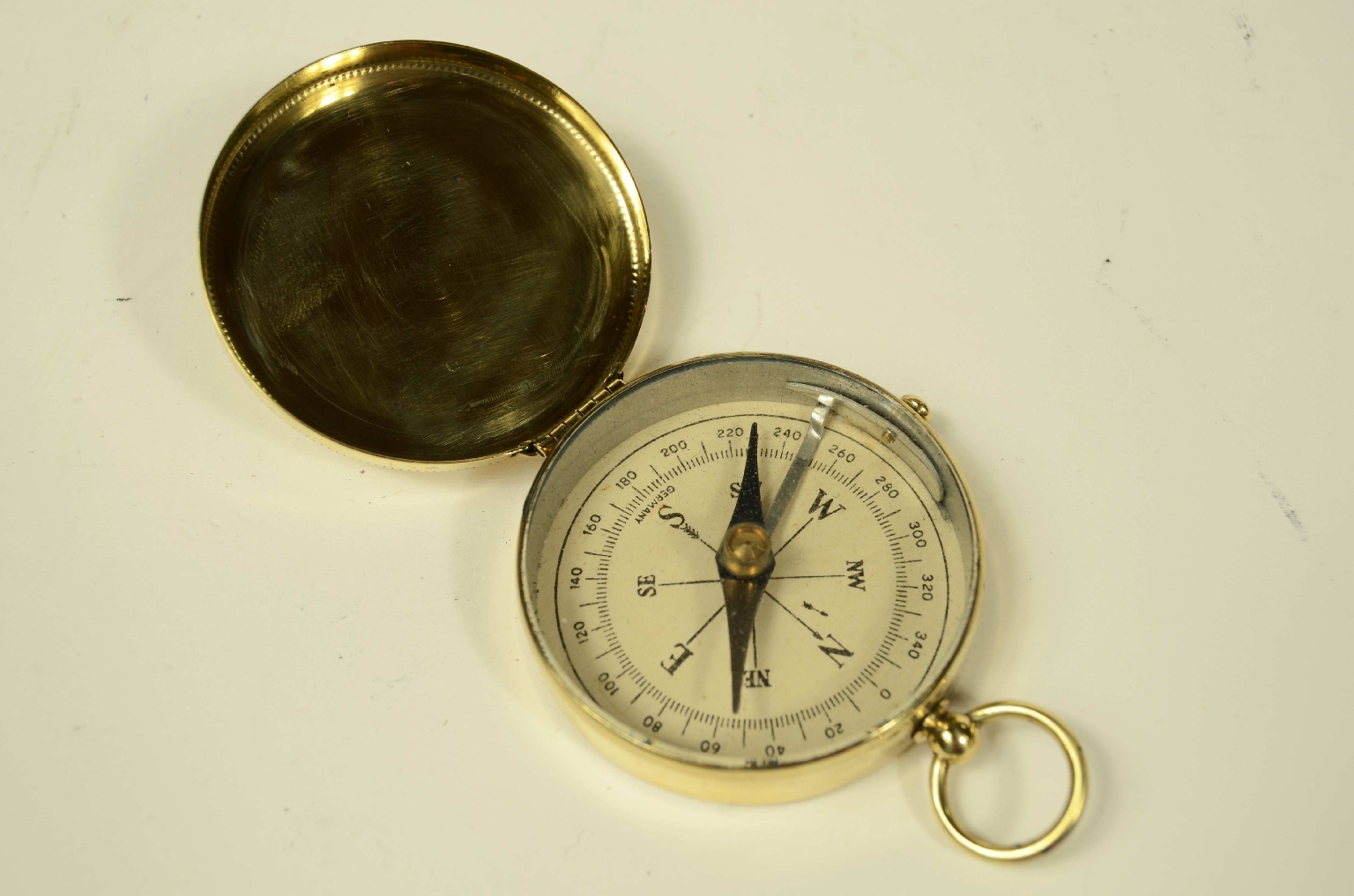
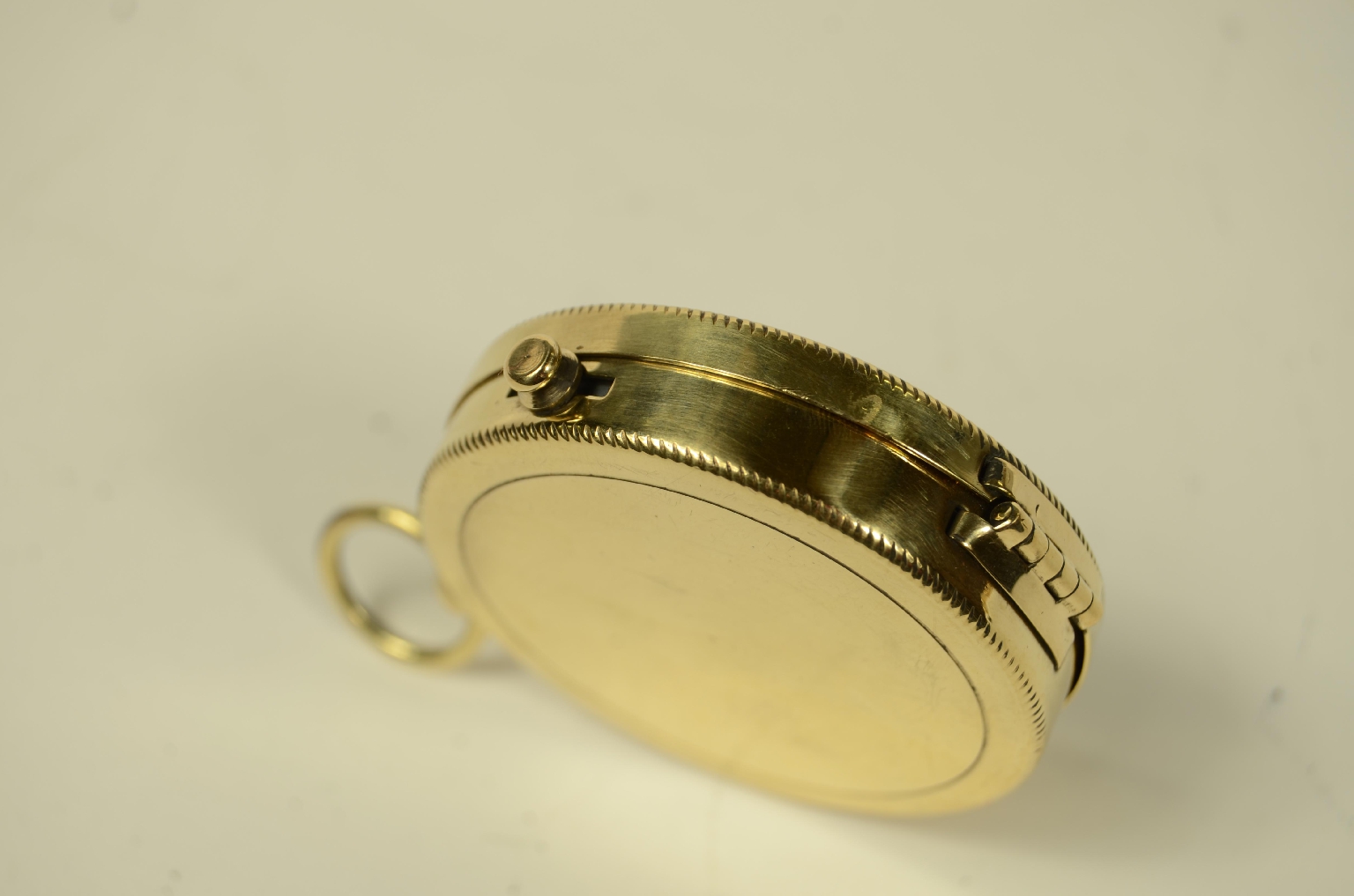
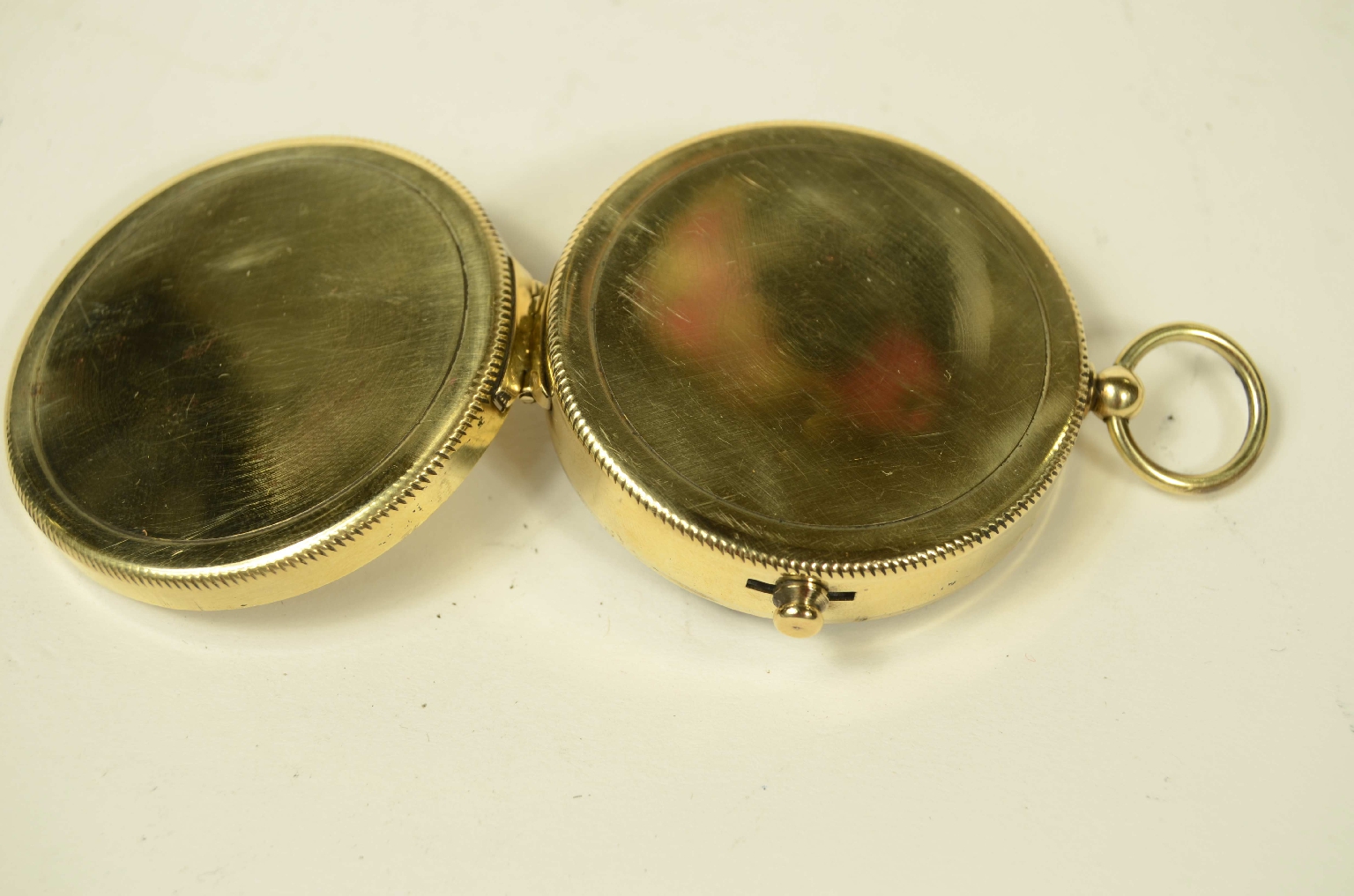
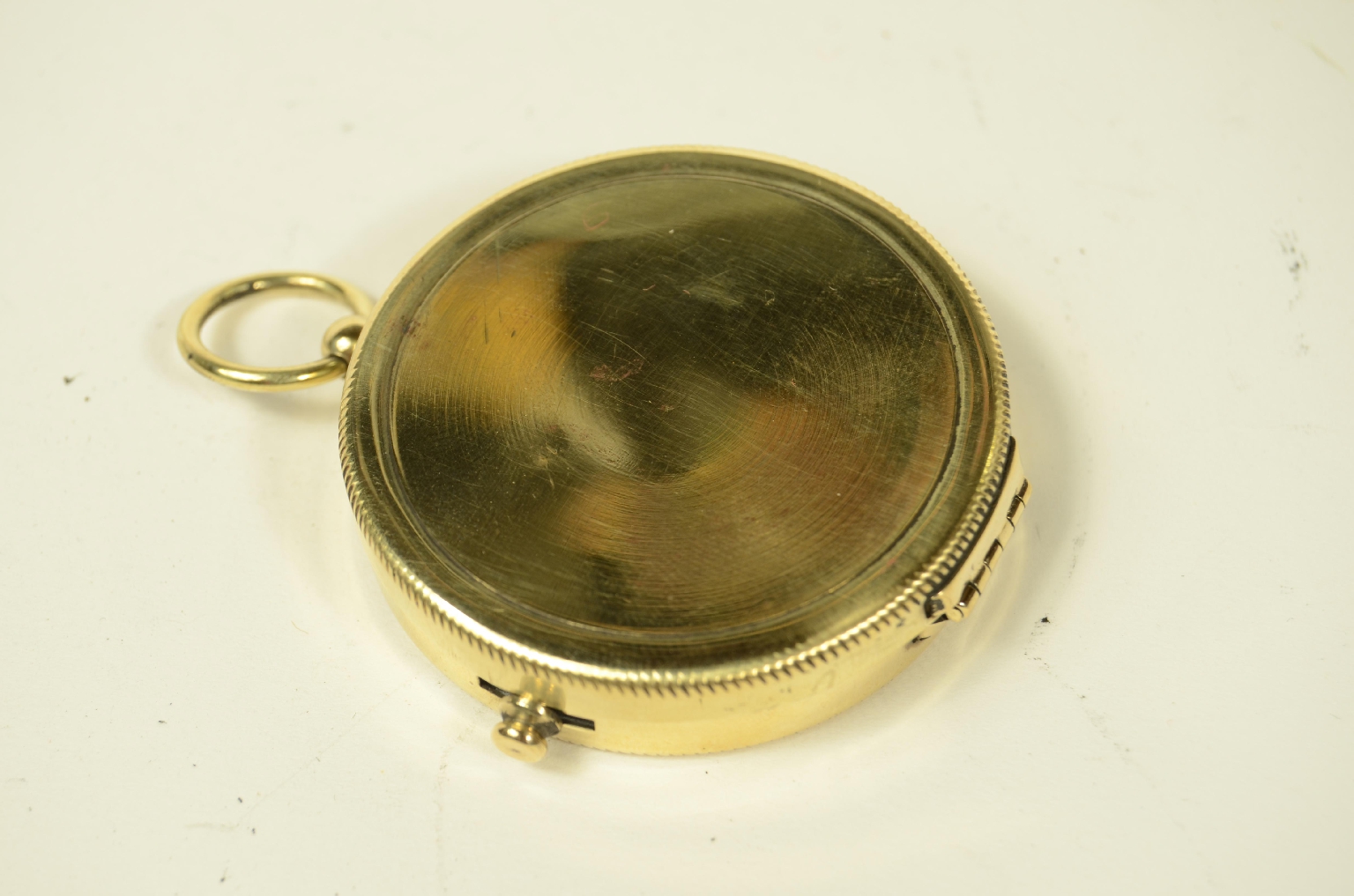
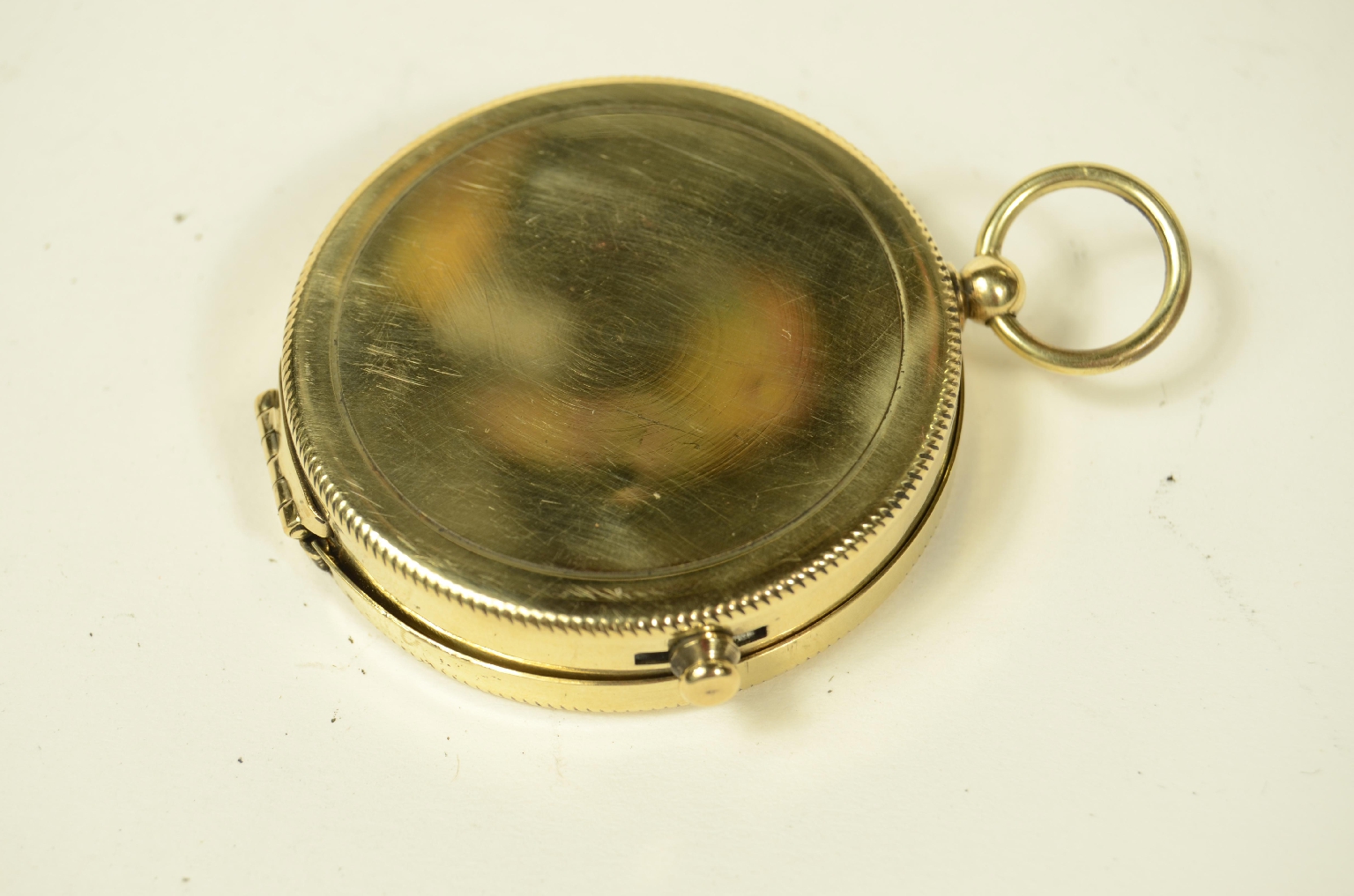
1782835288Code 8549 Small CompassSmall brass traveler's compass with lid, featuring a magnetized needle free to rotate on a horizontal plane to indicate magnetic North. It includes an eight-point compass rose printed on paper from a copper-plate engraving, as well as a needle-locking mechanism. French manufacture, 1920s. Dimensions: 4.5 x 1.2 cm (1.7 x 0.4 in). In good, fully functional condition.
The magnetic needle is said to have been used in China as early as 2634 BC. Indeed, ancient Chinese chronicles describe a chariot bearing human-like figures that, with arms outstretched, pointed south—the cardinal direction of greatest importance to the Chinese. A precise description of this chariot appears only during the reign of Emperor Hian-tsoung (806–820 AD), whereas the earliest references to the properties of the magnet are found in a Chinese dictionary from the 2nd century AD.
The first historical records regarding the use of magnetic directional force in Europe date back to the late 12th or early 13th century and credit the people of Amalfi with utilizing the magnet's properties. The claim that they invented the compass—first made by Panormita and later repeated by Flavio Biondo—gave rise to the legend of a non-existent figure named Flavio Gioia of Amalfi, who supposedly built the first compass in 1302. The instrument is believed to have spread throughout the Mediterranean before being introduced to the countries of the North.
FAQ
Do you provide an authenticity certificate/expertise?
Of course! The legislative decree n. 42/2004 stipulates that who sells works of art or historical and archaeological items has the obligation to deliver to the purchaser the documents attesting to the authenticity of the object, or at least to submit the documents relating to the probable attribution and origin. Antik Arte & Scienza provides an expertise (as warranty) that contains a description, period and assignment or the author, if known, of the item.
How can I pay?
Secure payments by PayPal, credit card or bank transfer.
What are the shipping terms and the delivery schedule?
Shipping by DHL or UPS is free (but if we are shipping to a country non-EU remember that any taxes and customs duties are on your expense), and items will be sent just after receiving of payment.
Italy: delivering on the average in 24 h.
Europe: delivering on the average in 2/3 weekdays.
Other countries: delivering on the average in 5 weekdays; custom duties charged to the buyer.
Is shipping insured?
Of course! Free insurance by Lloyd's London that covers almost all destinations.
If I change my mind, can I return the item?
Of course! (see our general terms for more information).
e-Shop
Antique compasses
Code 8549 Small Compass
Antik Arte & Scienza sas di Daniela Giorgi - via S. Giovanni sul Muro 10 20121 Milan (MI) Italy - +39 0286461448 - info@antik.it - www.antik.it - Monday-Saturday: 10am-7pm