antik.it/Natural-history/8685d-Fossil-Ammonite/
Code 8685d
EUR 1400.00
In stock
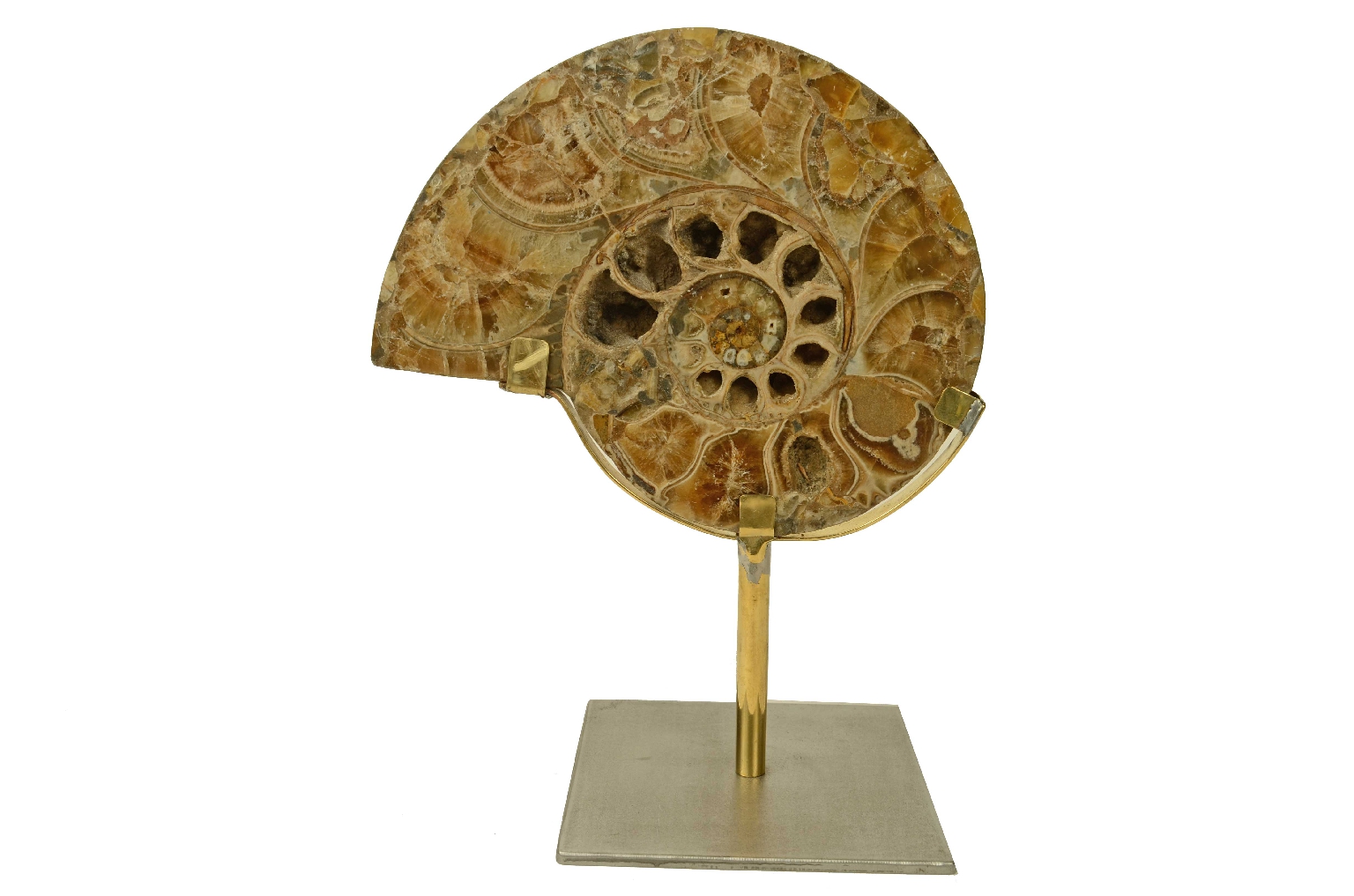
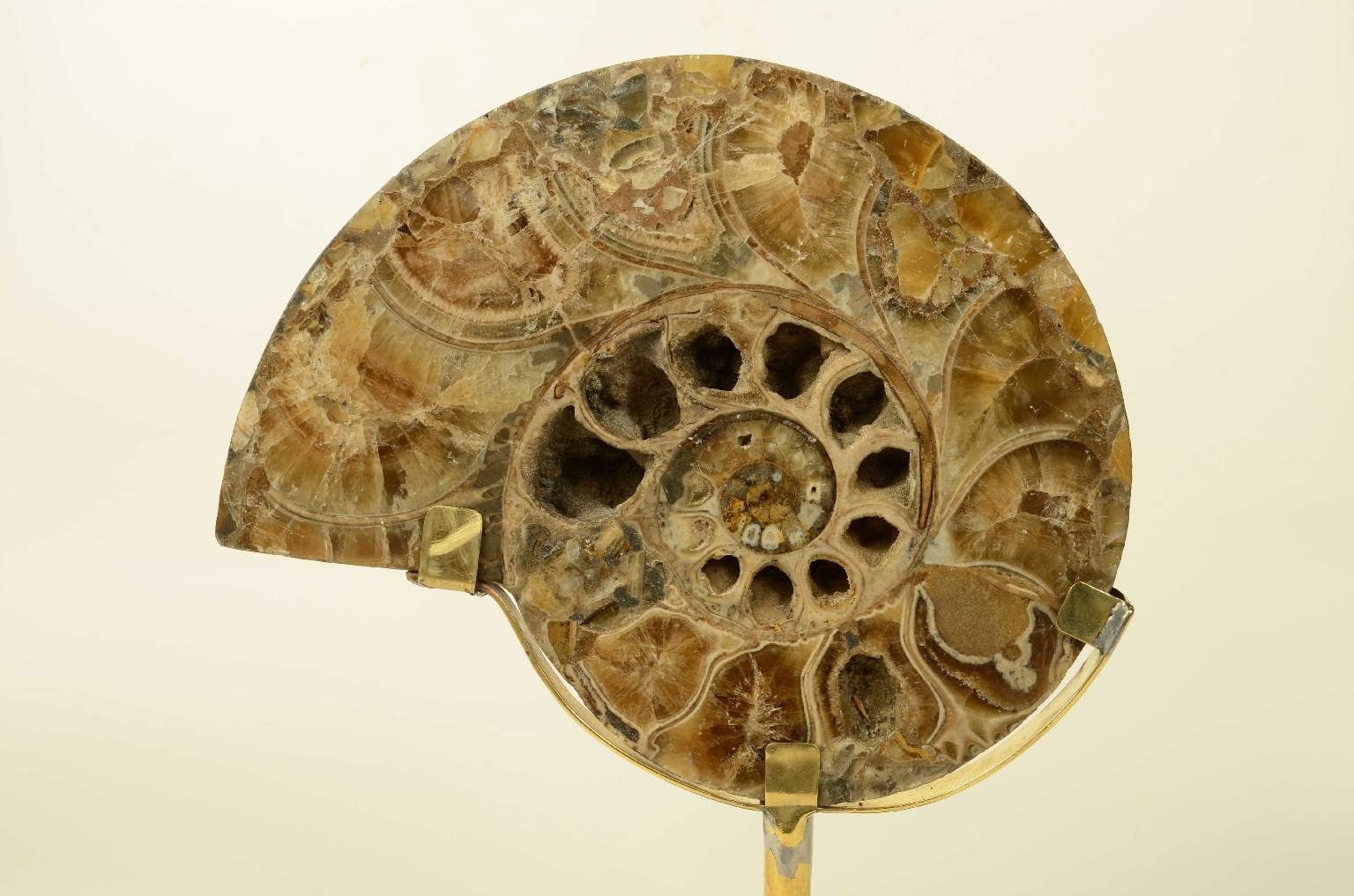
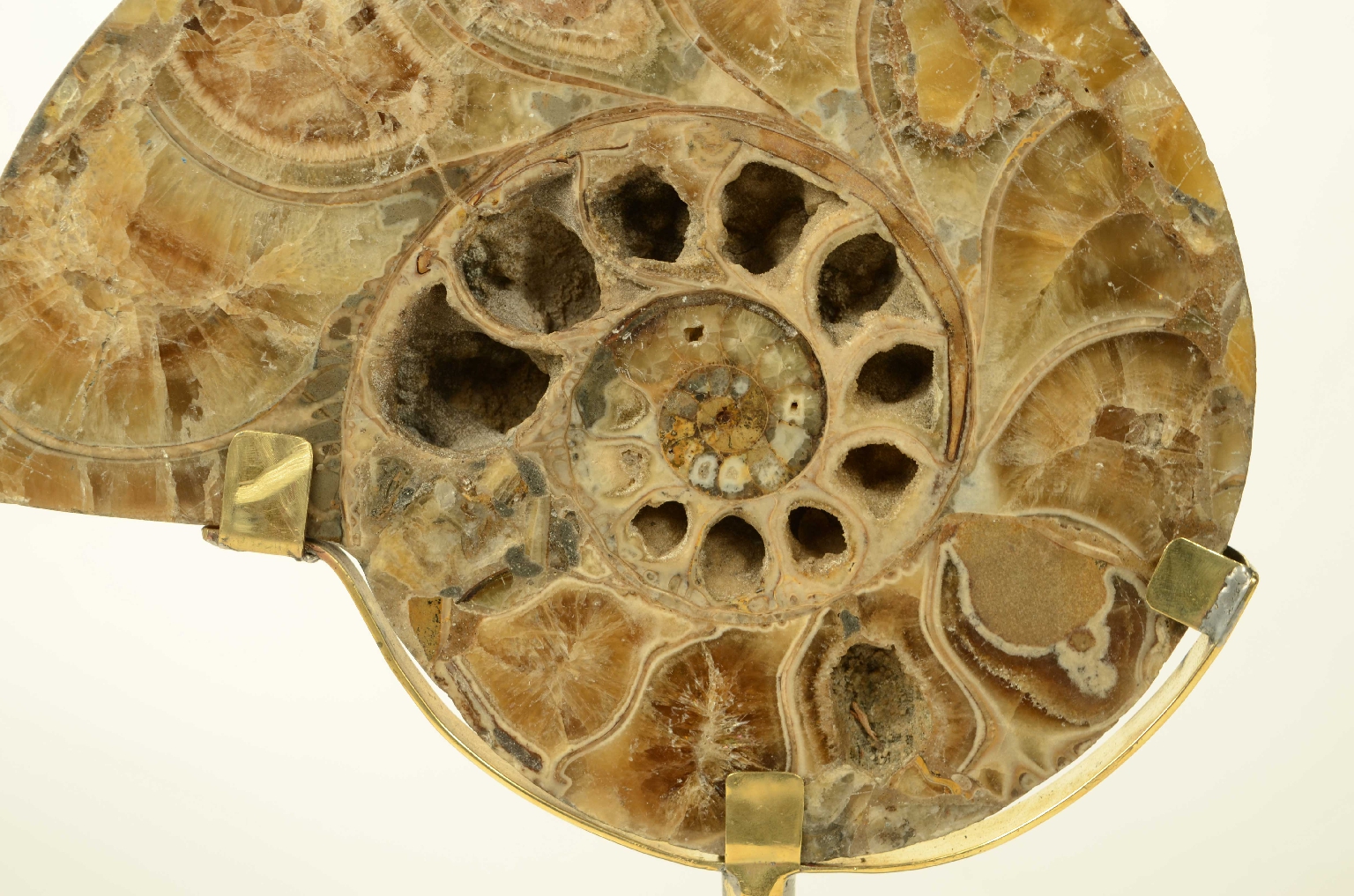
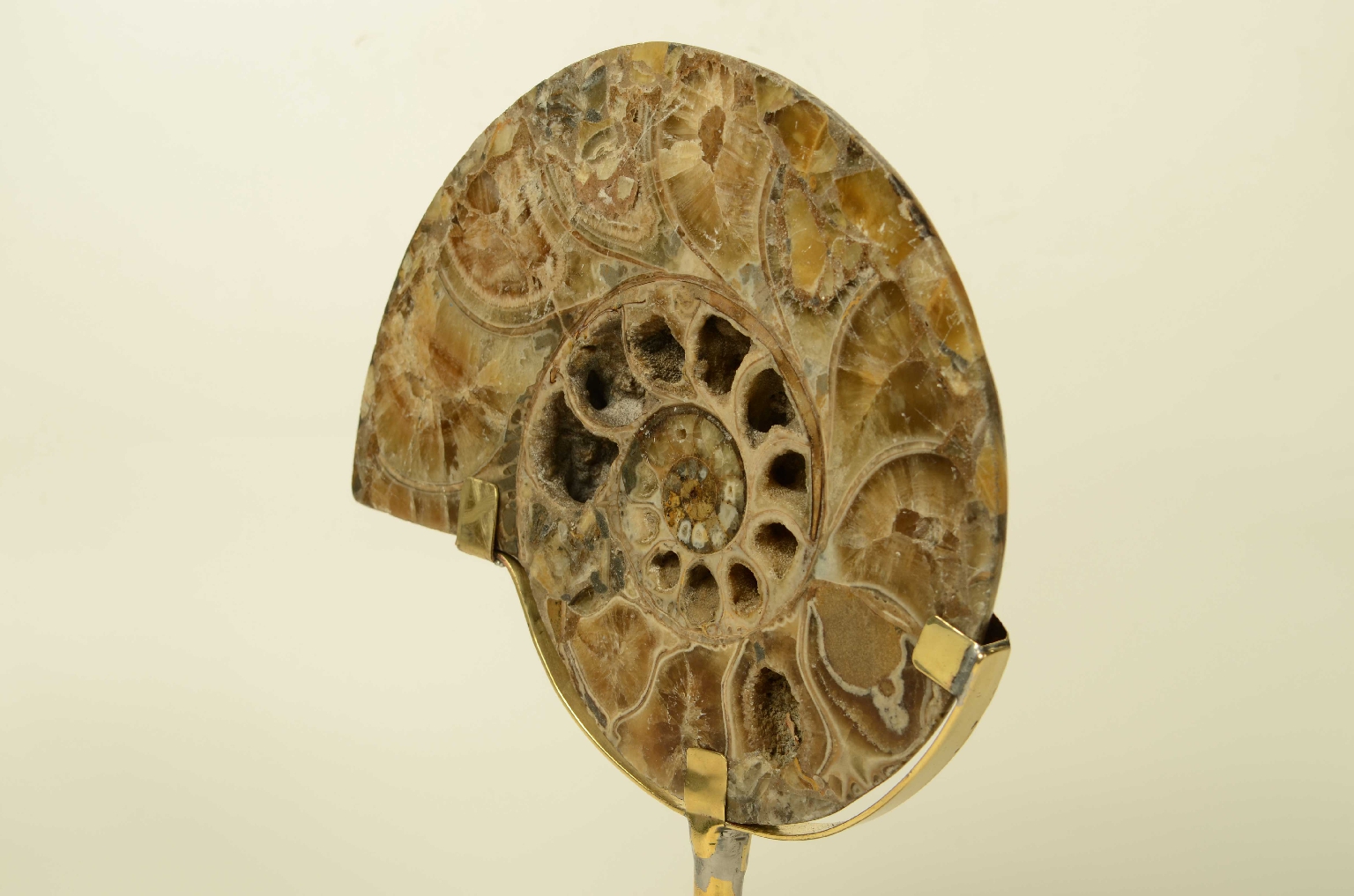
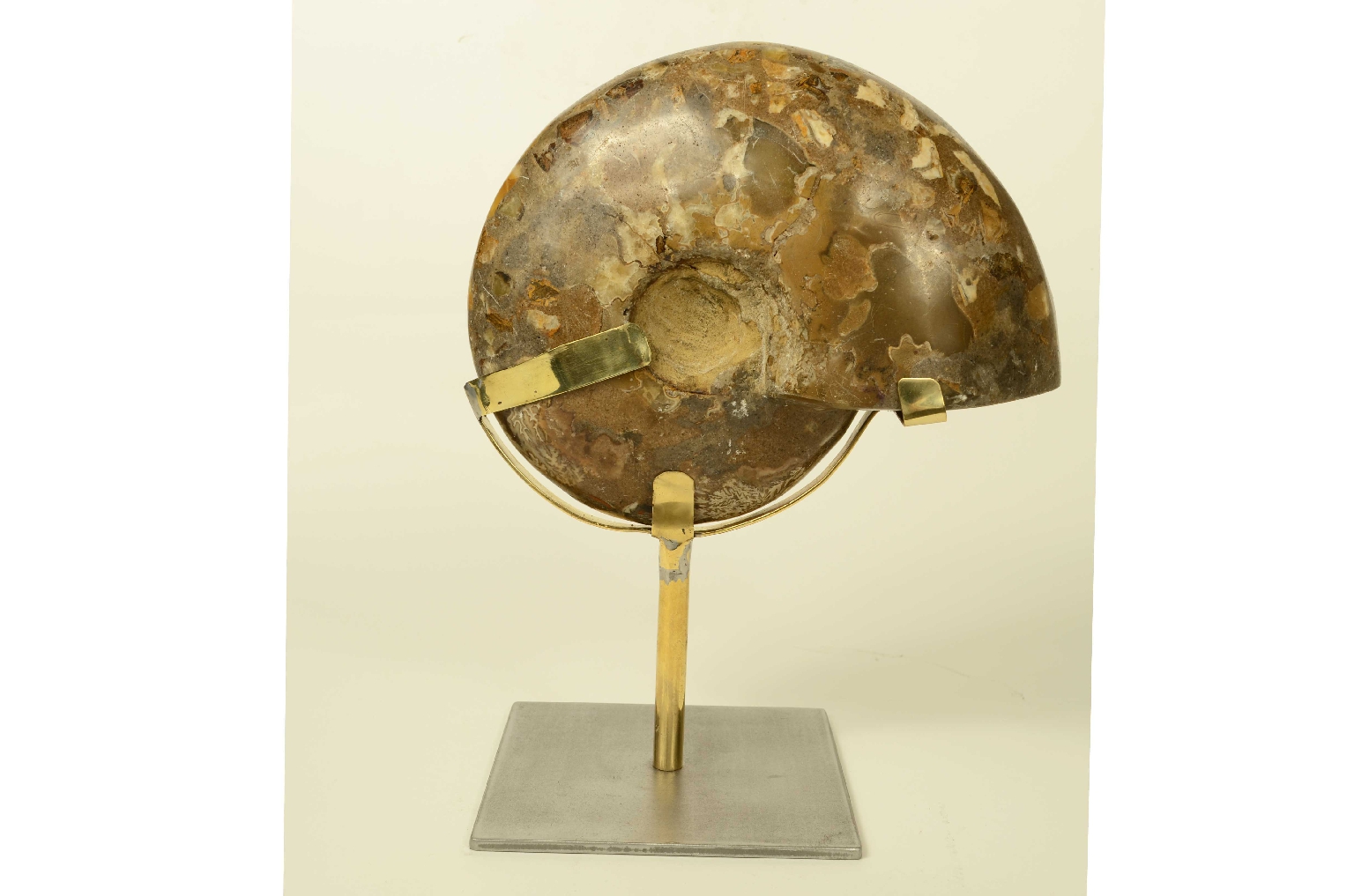
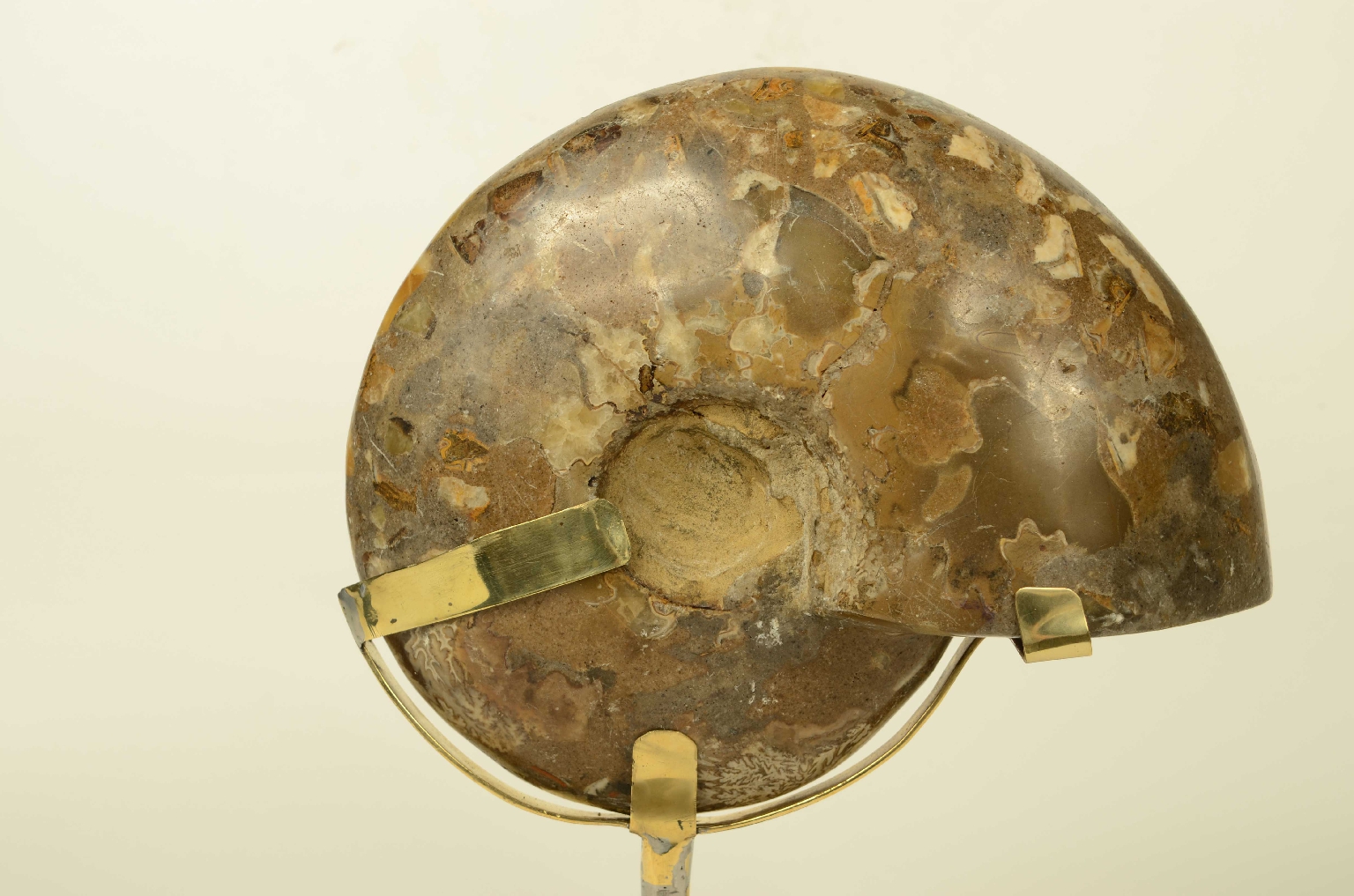
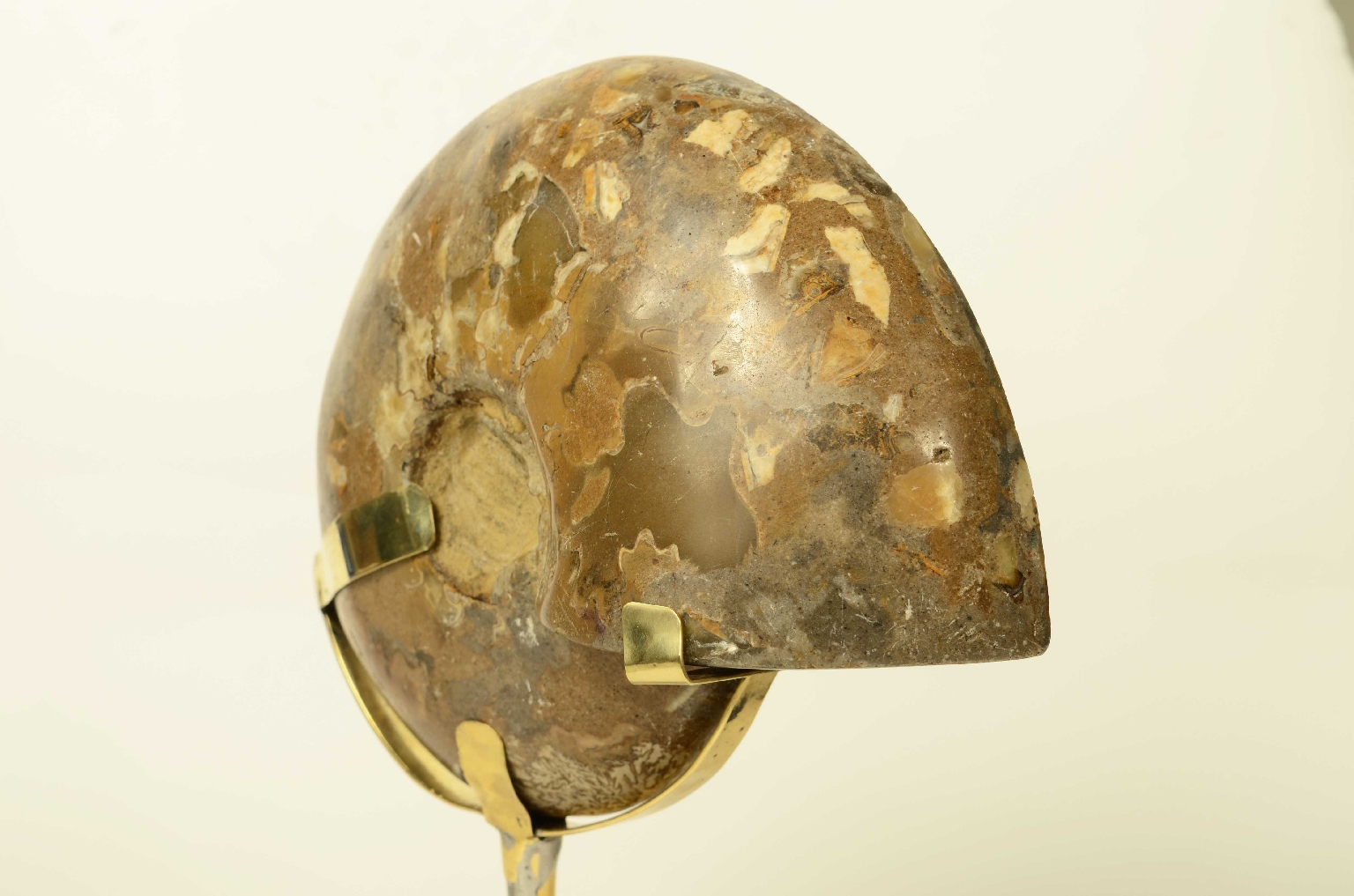
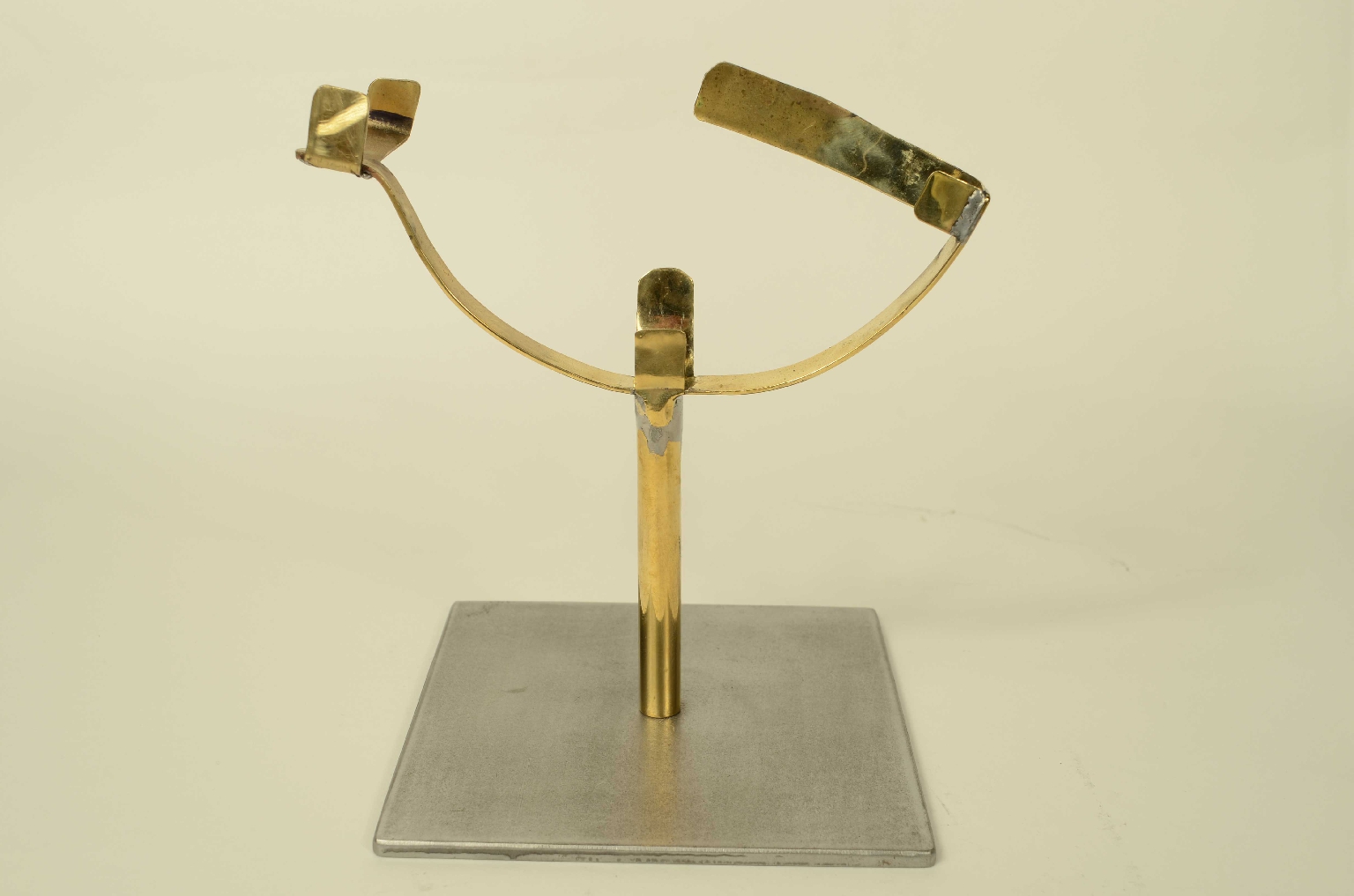
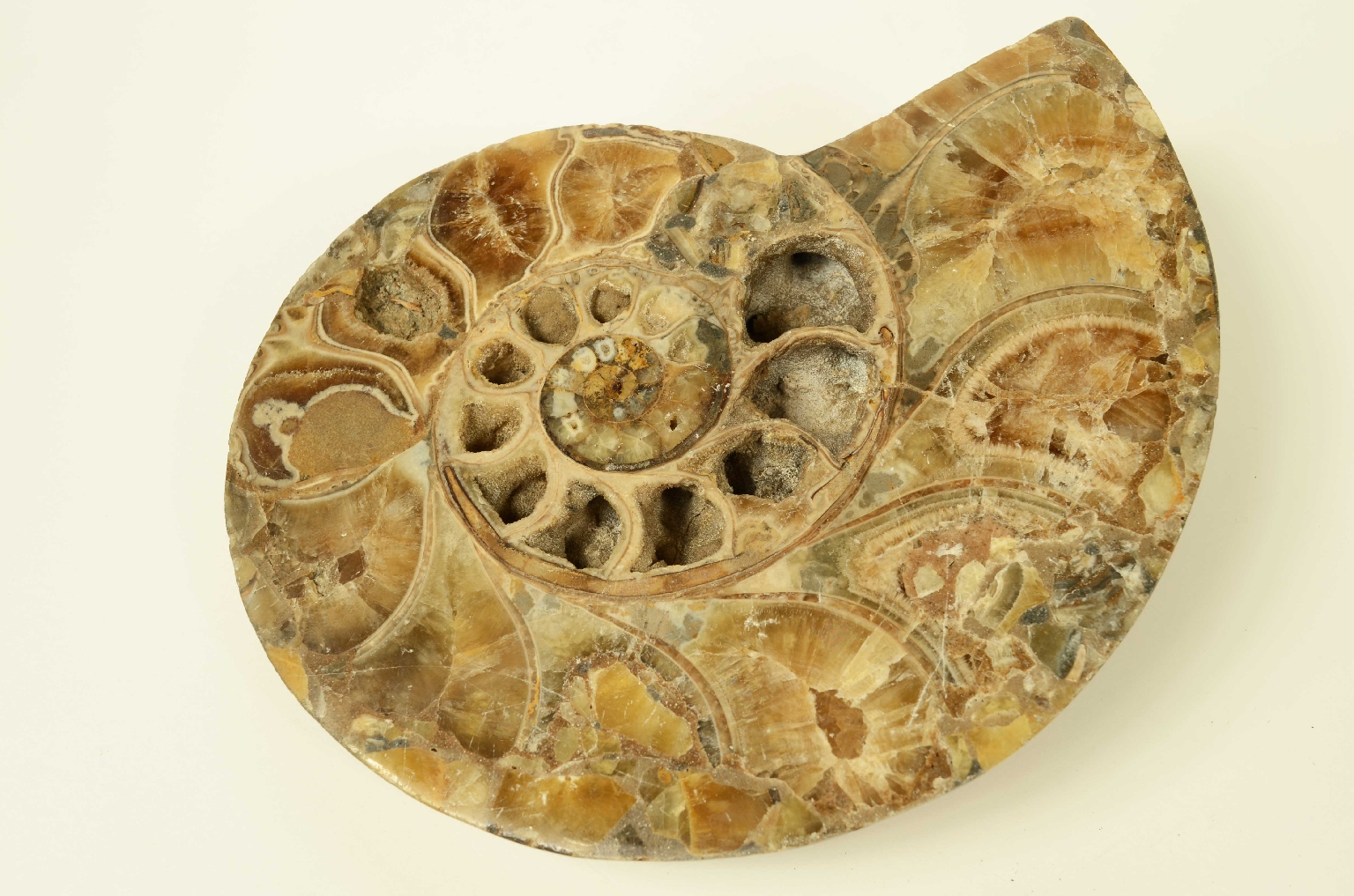
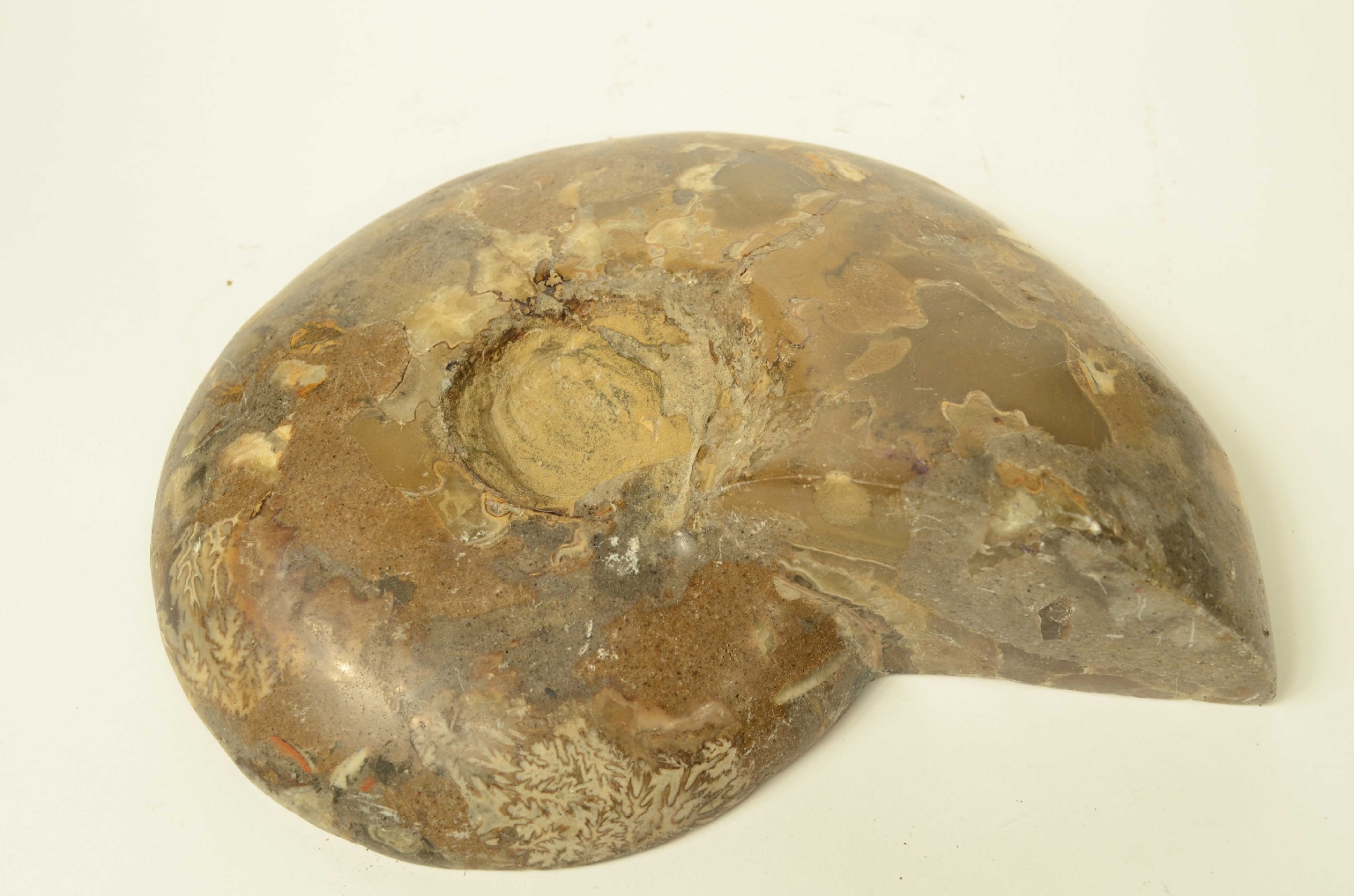
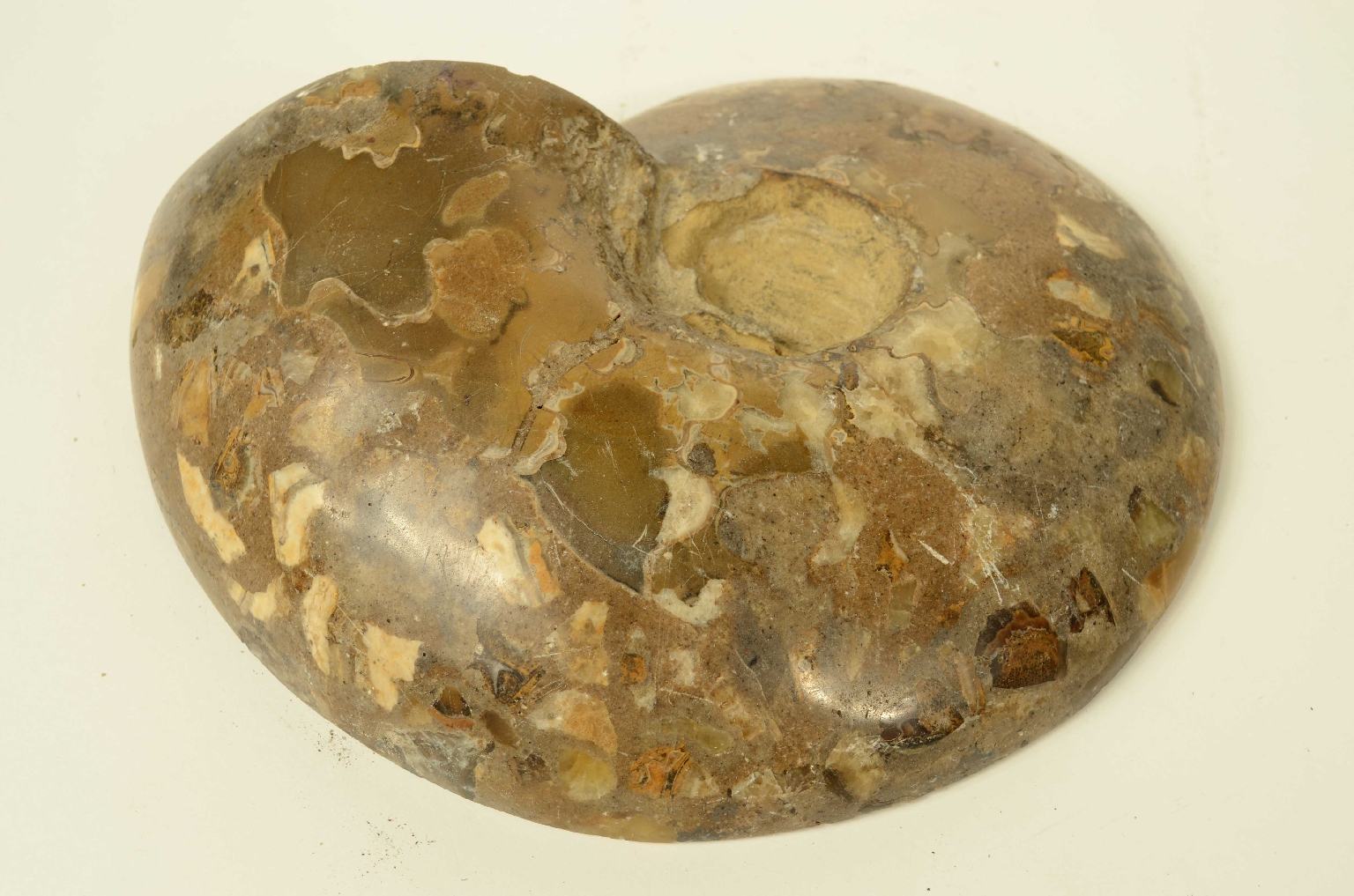
1791474902Code 8685d Fossil AmmoniteA cross-section of a fossil ammonite from the desert of Madagascar, in a good state of preservation; during the fossilization process, its chambers became filled with calcite crystals displaying warm amber hues. It is mounted on a custom-made iron and brass base. Good condition. Ammonite dimensions: 24 x 6 x 19 cm (9.5 x 2.4 x 7.5 in). It dates back to the Jurassic period (150–170 million years ago)—the second period of the Mesozoic Era—which was characterized by a marine transgression that transformed Europe into a vast archipelago. The ensuing warm climate fostered the development of cycads and conifers; regarding fauna, ammonites are of particular stratigraphic importance. They derive their name from the Egyptian god Ammon, owing to the shell's characteristic spiral shape, which resembles a twisted horn.
Ammonites belong to a group of extinct marine animals that lived over a vast span of time—from the Paleozoic Era to the end of the Mesozoic Era, between 400 and 65 million years ago—when they vanished alongside many other organisms (such as dinosaurs and flying or aquatic reptiles) during the well-known biological crisis at the end of the Cretaceous period. They possessed a chambered shell—that is, one divided into compartments—which was generally coiled in a spiral. Ammonites were skilled swimmers thanks to the unique structure of their shells: following the initial chamber (the "body chamber," where the animal lived) came a series of sealed chambers traversed by a siphuncle. These chambers could easily be filled with gas, allowing for precise buoyancy control—enabling the creatures to dive or rise to the surface much like modern submarines—while a jet propulsion system allowed them to move horizontally. A vast array of ammonite forms succeeded one another over time, enabling scientists to use them to determine the relative age of the rocks in which the fossils are found; for this reason, they are known as "index fossils." As they were exclusively marine organisms, their discovery also provides evidence of the existence of ancient seas at the excavation site. Due to their immense scientific importance and the beauty of their forms, they have long been considered the symbol of paleontology.
FAQ
Do you provide an authenticity certificate/expertise?
Of course! The legislative decree n. 42/2004 stipulates that who sells works of art or historical and archaeological items has the obligation to deliver to the purchaser the documents attesting to the authenticity of the object, or at least to submit the documents relating to the probable attribution and origin. Antik Arte & Scienza provides an expertise (as warranty) that contains a description, period and assignment or the author, if known, of the item.
How can I pay?
Secure payments by PayPal, credit card or bank transfer.
What are the shipping terms and the delivery schedule?
Shipping by DHL or UPS is free (but if we are shipping to a country non-EU remember that any taxes and customs duties are on your expense), and items will be sent just after receiving of payment.
Italy: delivering on the average in 24 h.
Europe: delivering on the average in 2/3 weekdays.
Other countries: delivering on the average in 5 weekdays; custom duties charged to the buyer.
Is shipping insured?
Of course! Free insurance by Lloyd's London that covers almost all destinations.
If I change my mind, can I return the item?
Of course! (see our general terms for more information).
e-Shop
Natural history
Code 8685d Fossil Ammonite
Antik Arte & Scienza sas di Daniela Giorgi - via S. Giovanni sul Muro 10 20121 Milan (MI) Italy - +39 0286461448 - info@antik.it - www.antik.it - Monday-Saturday: 10am-7pm